
Andrea Miller: You grew up in Vietnam. What was that like and how did it lead you to the work you do today with Buddhist Global Relief?
Kim Behan: When I was growing up, my family was doing really well. My father had a business, and girls my age had to work for my parents. I remember at a young age, I always questioned, “Why is that? Why am I going to school while these girls are working to support their families?” They were teenagers. They did not have the chance to get an education. This is very common in Vietnam.
My father was a humanitarian and had a lot of vision. He said, “You’re very fortunate to have an education. You’re fortunate to grow up in a comfortable family. But when you’re successful, do not forget the poor people of the country—the people in need.” That had a strong impression on me at a young age.
How did you come to the dharma?
My dad was Catholic and my mom was Buddhist. In our home, Buddhist nuns and Catholic nuns would both come. But because my parents were so busy, my grandmother was the great influence in my life. She was a devout Buddhist, and every day she made me bow down one hundred times to the Buddha. So, I think at a very early age, I had a taste of Buddhism but not quite an understanding of the meaning of it.
I came to the U.S. after high school. Then I started college and built a career and never really looked back at Buddhism until 2006 when, somehow all of a sudden, I became interested. I saw there was a retreat led by Venerable Bhikkhu Bodhi at Bodhi Monastery in New Jersey. At that time, I didn’t know who Venerable Bhikkhu Bodhi was. I just signed up because it was the only place that would give me a ride from the airport to the monastery.
When I joined that first retreat, I walked into the monastery and saw a really big statue of the Buddha. I bowed down, and then there was a monk coming from my right, and I bowed down to him as well. It turned out that was Venerable Bhikkhu Bodhi. He was really my first dharma teacher.
What drew you to Venerable Bhikkhu Bodhi?
I saw the kindness in him. It was the way he spoke, the way he explained the dharma. I think it was the depth of his Buddhist teaching, and what I needed to learn at that time. Venerable Bhikkhu Bodhi is one of the most prolific teachers I have met, and I am so amazed at the immensity of his contributions to the dharma world through the translation of the Nikayas.
You’re a founding member of Buddhist Global Relief. How did you get involved?
In 2007, my sister, who’s a medical doctor in Belgium, and I started a nonprofit. We were helping with medical missions to Vietnam, sending doctors from Belgium to Vietnam to do surgeries for free for poor people. Then in 2008, I wrote an email to Venerable Bhikku Bodhi. I thanked him for the 2006 retreat and also shared with him the initiative my sister and I had put together.
Venerable Bhikkhu Bodhi answered. He said, “I’m so glad to hear from you, and thank you for sharing the initiative. We’re thinking about starting an organization, and since you have some experience, we’d like to invite you to join the discussion.” So, Venerable Bhikkhu Bodhi called an initial meeting of about ten to twelve people, and that’s how Buddhist Global Relief started.
It’s the work of the heart. I feel it’s my calling in life and to this day the dharma and the work for BGR are inseparable for me. The work became my practice. My practice became my work. The life of the poor is really in my heart, so I can put everything else aside.
What is the mission of Buddhist Global Relief?
There are four areas of our mission. Food support, children’s education, women’s livelihood, and sustainable agriculture.
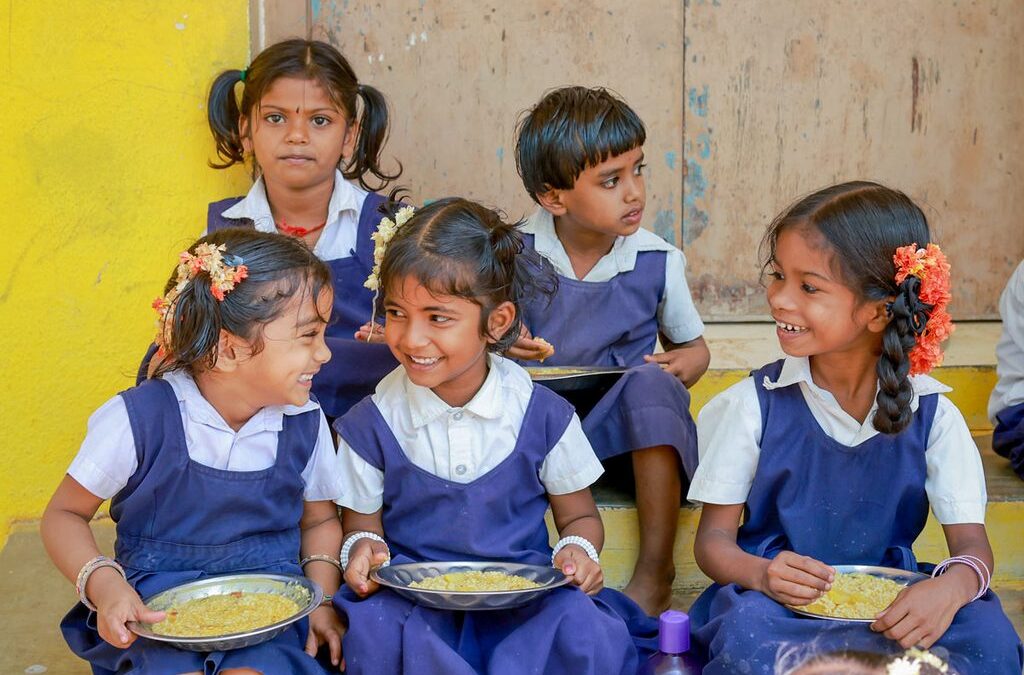
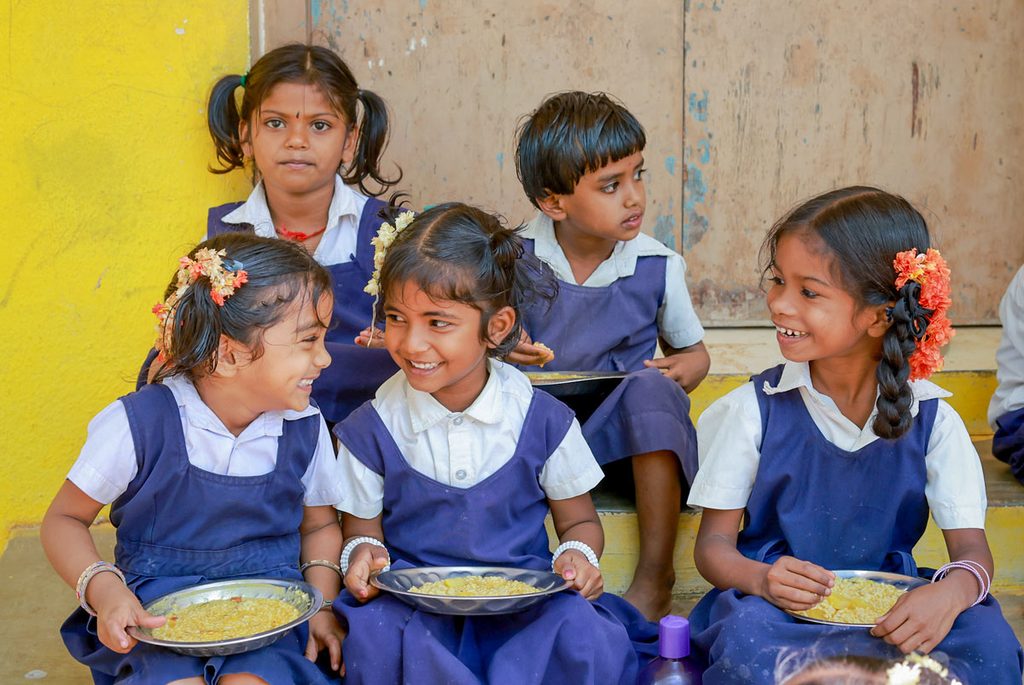
Initially, our projects were focused on food assistance and education for children, mainly girls. Children’s education is about creating change in the long term, but without food support, there’s no children’s education.
Why does Buddhist Global Relief support the education and livelihood of girls and women in particular?
Venerable Bhikkhu Bodhi is a very strong supporter of educating girls. I think especially in Southeast Asia, women play an important role in the family—in the education of the children and in the well-being of the family. So, by providing them with education and livelihood—we have examples of this time and time again—these women go on to make money and send their children to school. So, that’s why it’s so important for women to get education and training; it uplifts the whole family. Of course, it’s important also to help boys. But I think girls are more at a disadvantage in many cultures.
What was one of the first projects that Buddhist Global Relief took on?
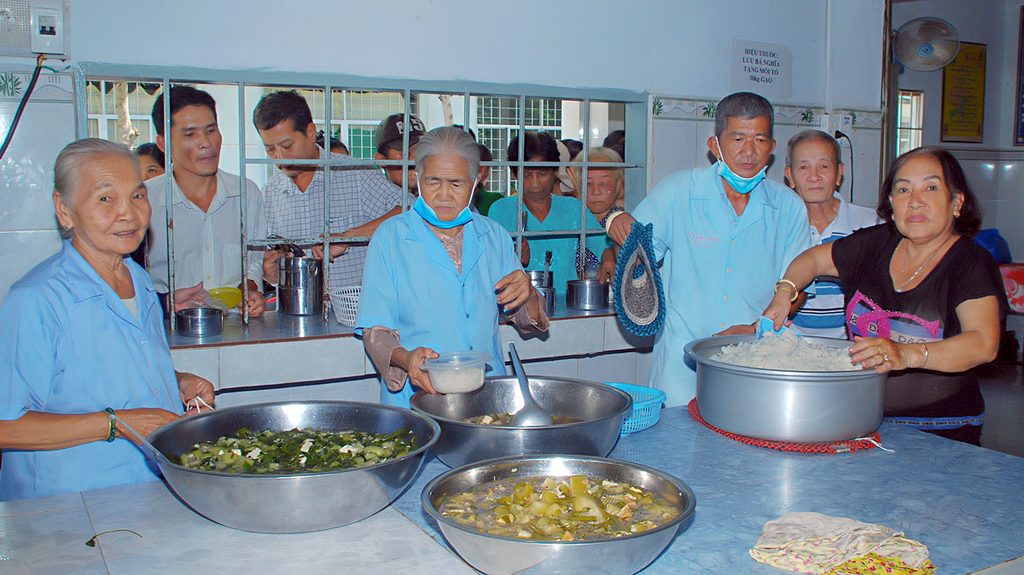
I had connections with the Red Cross in Vietnam, so we started helping them provide hospital meals in economically disadvantaged areas. In Vietnam, when people go to the hospital, meals are not included, so this program supports three meals a day for hospital patients who otherwise would not have the proper nutrition to recover. We’re still doing this project today.
How many projects is Buddhist Global Relief involved in now?
Last year we funded sixty projects for 1.3 million dollars. These projects are in Africa, North, Central, and South America, India, Sri Lanka, and Southeast Asia.
Can you tell us about one of the projects that you’re excited about?
North Country Mission of Hope is a Christian Organization in Nicaragua. In Nicaragua, schooling is only mandated until about age twelve, but many children do not even complete that level of education. Due to poverty, there are a lot of dropouts. BGR has been partnering with this organization since 2016. We provide educational scholarships that include uniforms, backpacks, textbooks, and school supplies for girls in primary school.
Some have gone on to secondary school and have graduated. Now Buddhist Global Relief has added a second program to help them with college or technical school. This past spring, we funded twenty-two young women. It’s really important that Buddhist Global Relief is there for the long term because that’s what’s required for transformation. If we were there one year, three years, or even five years, you would not see transformation.
I’d like to read something to you. It touched me deeply. This is what the Deacon James Calin of North Country Mission of Hope said, “In Nicaragua, the barriers that poverty places to achieving a necessary education can be insurmountable without a hand-up. BGR Education program clears a path for many who otherwise would not have the opportunity to achieve this life-changing and hope-filled education. This priceless gift can never be taken away, and will guide these students their entire lives.”
It almost brings tears to my eyes. For me, what’s moving is that, for the first time, these young women are able to break the cycle of poverty that’s afflicted their families for generations.
The board and the staff of BGR is really stable. Why do you think people want to keep doing this work year after year?
One, it’s the vision. And, two, it’s how we work together. The work is truly not about ourselves, but about the people we serve. So, if there are differences or disagreements as we move along toward the goal, we’re mindful of what we can do to help each other, and then we just look toward our goal, which is to serve the people. So that has really helped build harmony within the team.
Relationship is everything—the relationship with our partners who are working on the ground in the countries we serve, the relationship or connection with the people we serve, including respecting their culture, and also our relationship with our donors and supporters, which is key.
What is going on right now nationally and internationally that makes it more urgent than ever to support BGR and other organizations like BGR?
The biggest hit was the shutdown at USAID. In addition to the sixty annual projects, we also do crisis response, and some of the main organizations we fund are the World Food Program, UNICEF, and large organizations like Helen Keller International and Action Against Hunger.
With the cut of USAID, all these organizations are suffering. They were depending on USAID, so now they come to smaller organizations, and they just love faith-based organizations such as Buddhist Global Relief. The feedback I received is that faith-based organizations work very differently than secular organizations. We bring in loving-kindness, compassion, and mindfulness. That care does not exist in secular organizations, and that’s what I love about Buddhist Global Relief. After working for almost thirty years in secular organizations with layoffs and just how they treat employees, it feels good to be with an organization where we value compassion, relationship, and other wholesome qualities that the Buddha taught.
Some people think that Buddhism and social action should be separate. What are your thoughts about that?
Theycannot be separate. For me, the work for Buddhist Global Relief is very simple in some ways: I just put myself in the shoes of people who need help. Here I am, a girl living in poverty. An organization that comes and offers me education will change my life. How would I feel? I just bring it to that level.
We are all different wells. You are a separate well. I’m a separate well. All these different wells—even though they look different—are connected at the same water level. Our needs are very, very similar. Basic needs—the body needs food, the mind needs concentration. Once we understand our needs, we understand the needs of others. So, for me, whenever I face a difficulty in the work, I always put myself in the recipients’ shoes, and I have some clarity about what to do.
How do you practice mindfulness as you do your work for Buddhist Global Relief?
I like to meet every aspect of our work with attention, and care, and not always rushing. For me, future planning is grounded in the present moment. It’s the present moment that’s going to shape the future. The present moment becomes the past, and the future become the present moment. So, if you’re in the present moment, you catch the past and you catch the future. To be in the present moment, you see what’s at hand and work with what is. For me, it’s a journey of mindfulness.
I want to share a personal experience with you. In the past, whenever I forgot something in my work for BGR, I felt bad. Now I don’t. It’s like, okay, I sent out an email and missed something, but I’ll remember it next time. There’s no regret. No worries about the past. No worries about the future. I just stay in the present moment.
That’s truly the teaching of the Buddha. There are 84,000 teachings, but they all comes back to one teaching: mindfulness. Before I didn’t understand what mindfulness meant, but it’s mindfulness of the present moment. Be aware. If we cause some hurt feelings, we recognize it because we’re mindful. We see what we’re doing and it’s like, okay, next time I will not do that.
Can you talk about the role of faith in your life?
I have a profound faith. The more that I study the dharma, the more that I work for Buddhist Global Relief, the more I develop a profound faith in the buddhadharma. My faith has become almost unshakable.
The Buddha talked about unshakable faith. I didn’t used to understand how you get to that. It comes through our practice, through our work. It is through day-to-day experience that faith develops. You cannot just say, “Oh, I want to have faith.” It has to develop gradually, and it is developed gradually through our experience and seeing how the dharma manifests in our life and transforms our life. If ten years ago I could have seen myself today, I wouldn’t have recognized myself. I’ve had that much transformation. The biggest thing for me is faith and just such a deep gratitude to Venerable Bhikkhu Bodhi for being my teacher, for being the person who brought me to Buddhist Global Relief, and for providing unconditional support. I look back at my life, and I just have so much gratitude.
What is your approach to working with the BGR team?
When you work with a large team of people, disagreements and challenges naturally arise. But I focus on the place where we align as a team. Our practice is leaning into the spaces of resonance. That’s when we can move forward together.
By myself, I couldn’t do anything. Together, we can do so much. This is the path, and we all walking on that path together.
In good and bad times, the dharma will guide. I have that complete trust. So, whenever people throw their hands up, I say, place your trust in the dharma. Venerable Bhikkhu Bodhi has said that the dharma provides the tools we need at just the precise moment.
The post The Work Became My Practice appeared first on Lion’s Roar.
Recent Comments