
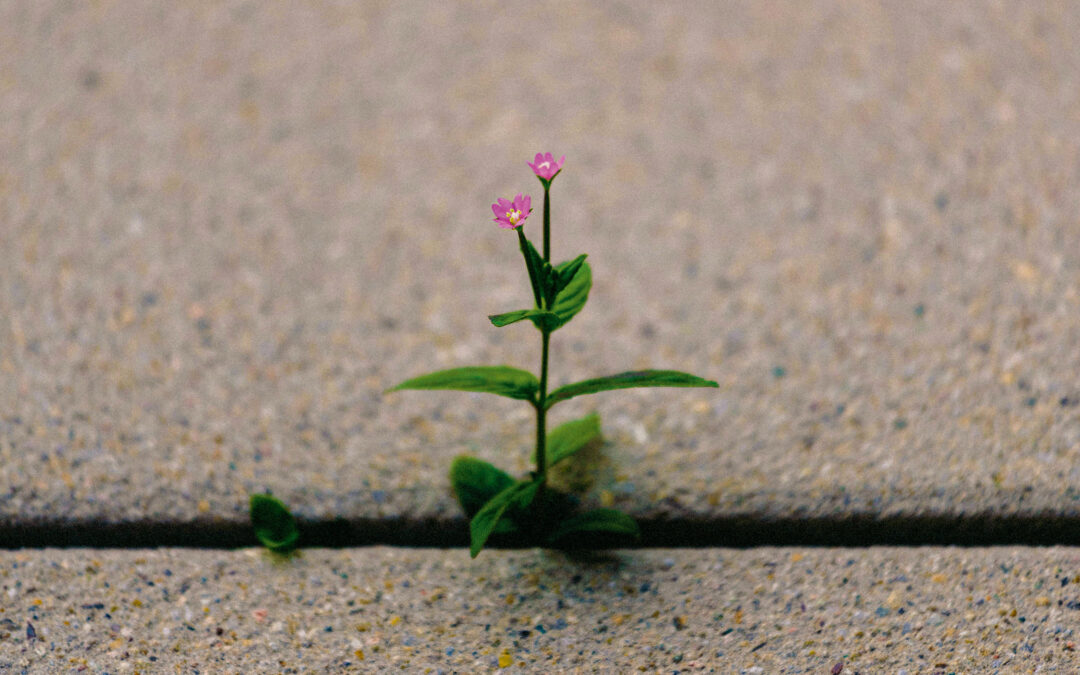
We hear about resilience often, yet most of us don’t recognize it when it quietly appears in our own life. It doesn’t always look like strength or steadiness. Sometimes resilience is a trembling breath we manage to stay with when we’re meditating after a stressful day. Sometimes it’s the moment we decide not to shut down our heart in the midst of an argument with our beloved, even though parts of us may want to disappear. And sometimes it takes a larger shape, such as the willingness to begin again after our home is destroyed by fires or floods.
In the Buddhist tradition, resilience isn’t about powering through overwhelming difficulties. It’s a soft, lived honesty—the ability to sit with our experience without abandoning ourselves. That’s the essence of the first noble truth: the truth of suffering, dukkha. Over the past twenty years of working with trauma survivors, I’ve come to see resilience as a deeply human capacity that grows in small, ordinary moments. No dramatic breakthroughs. No sudden transformations. Just breath by breath, feeling by feeling, the slow knitting together of a steadier inner life.
“As we learn to sit beside the dragon and be present with our pain — steadily, kindly — it changes.”
In a time when anxiety, socioeconomic division, climate grief, and personal heartbreak weigh heavily on so many, resilience becomes more than a personal virtue. It becomes a way of staying connected to our humanity, simply because resilience is our ability to choose thought patterns, emotions, and behaviors that make us happy. And the path of dharma is about choosing happiness.
Resilience is not merely “bouncing back.” None of us returns to who we were before heartbreak, loss, or trauma. Those experiences forever change the inner landscape of our tender hearts. Resilience is the capacity to let those changes soften us rather than harden us.
In my teaching, I consider trauma to be the capital-D dukkha. It’s an overwhelming life event that forever changes us. The four noble truths teach us how to work with dukkha, but when faced with trauma, we sometimes get caught in a churning whirlpool of thought.
I sometimes compare trauma to a sleeping dragon—not a monster to slay, but a powerful presence we don’t yet understand. When we sit with the large energies within us, they can initially feel overwhelming, like the fire breath of a dragon. As we learn to sit beside the dragon and be present with our pain—steadily, kindly—it changes. What once terrified us becomes an inner fuel: courage, clarity, a deeper truthfulness.
From a mindfulness and somatic perspective, resilience has three intertwined qualities:
- a body that can settle after being activated
- a heart that can stay open enough to heal and feel
- a mind that trusts its ability to meet life moment by moment
When these qualities begin to work together, we experience a groundedness that acknowledges rather than denies suffering and isn’t undone by it.
Resilience grows slowly, almost imperceptibly. It begins in the body, with practices that help us recognize when we’re bracing—holding our breath or tightening or fleeing due to fear. As we sit in meditation, we tenderly hold our own unspoken fears, putting a hand on the chest, exhaling more deeply, and feeling the floor beneath our feet. These small gestures remind our nervous system that it too can return home to a steadier rhythm.
Over time, we strengthen resilience through:
- mindful awareness of our breath
- grounding and somatic presence in our body
- self-compassion and compassion toward others’ suffering
- community and connection with friends, loved ones, and our sangha
- healthy boundaries to support our mind, heart, and body
- the willingness to feel our feelings, even when it’s uncomfortable to be present to ourselves and others
These practices don’t eliminate difficulty or dukkha in our lives. They give us more room to be with it in a kind, gentle way. Healing from trauma might begin with noticing a single breath or realizing when your shoulders have lifted toward your ears. These moments matter. Each one interrupts old patterns, allowing you to experience self-love and to be self-compassionate.
Mindfulness Practices That Support Resilience
Mindfulness is at the heart of resilience because it teaches us how to return—to the body, to the breath, to this very moment where our heart can rest and healing is possible. It gives us a place to stand internally, especially when our life may feel shaken in response to difficult events. Here are some mindfulness practices to help evoke your inner resilience.
Somatic Grounding
Feel your feet supported by the earth. Notice the breath as it moves through the body in your belly or your chest. Sense the weight of your hands. These simple anchors help steady your nervous system. They remind you that you’re here, in this moment, and that in this sacred now, you can meet what is arising with kindness and gentleness.
One-Minute Mindfulness
Take a single minute and let your awareness rest on whatever your senses offer you: a sound, a color, a movement in the periphery. Feel one breath without trying to change it. A minute isn’t much, but practiced regularly, it becomes a soft thread weaving through your day, pulling you back toward presence and returning you to the sacred now.
The NNPC Practice
This is at the core of resilience: remembering that we have options and that we can choose the thoughts, emotions, and behaviors that support our well-being. The NNPC practice is a simple sequence that creates a small but powerful space inside our reactivity, and within that space, choice becomes possible.
We begin by Noticing whatever sensations, emotions, or thoughts are arising, and then Naming them softly to acknowledge them. Next, we Pause, allowing a moment of spaciousness, so that habitual reaction doesn’t take over. From there, we Choose another direction—taking an action that differs from the one the emotion is urging, gently steering ourselves toward a wiser, more grounded response.
Daily Life as the Ground of Resilience
Formal meditation is helpful, but we build resilience in the everyday moments that don’t look like practice at all. It grows in:
- the calm breath we release when someone snaps at us
- the kindness we offer ourselves after a mistake
- the way we pause before reacting
- the softening that happens when we choose not to close off our heart
- the moment we rest instead of pushing past exhaustion
These small choices are not trivial. They shape how the nervous system learns to respond. They give us a lived experience of “This too shall pass as I stay present with it. I can stay with this, just for this one moment at a time.”
Over time, these ordinary moments weave themselves into a steadier, more grounded way of being.
In teaching and in my own life, I’ve seen that resilience isn’t a destination. It’s a process of becoming. It’s the quiet realization that while suffering is part of our experience, it doesn’t define us.
We’re like kintsugi pottery, broken pieces brought together again with fractures mended in shimmering gold. We may break with trauma or suffering, but mindfulness practices slowly give us the taste of our own loving awareness, which feels like cracks being filled with gold. The gold is not perfection. It’s the beauty that emerges when we meet our wounds with presence and compassion.
Mindfulness doesn’t erase wounds in our heart or body, yet it changes our relationship to them. Resilience grows in that emerging new relationship. It grows when we stay with ourselves, even when the ground shifts beneath us.
Resilience is not bouncing back. It’s the emergence of the inner knowing that you’re someone shaped by experience, guided by wisdom, and able to meet life with a heart that remains open.
The post The Quiet Work of Becoming Resilient appeared first on Lion’s Roar.
Recent Comments