
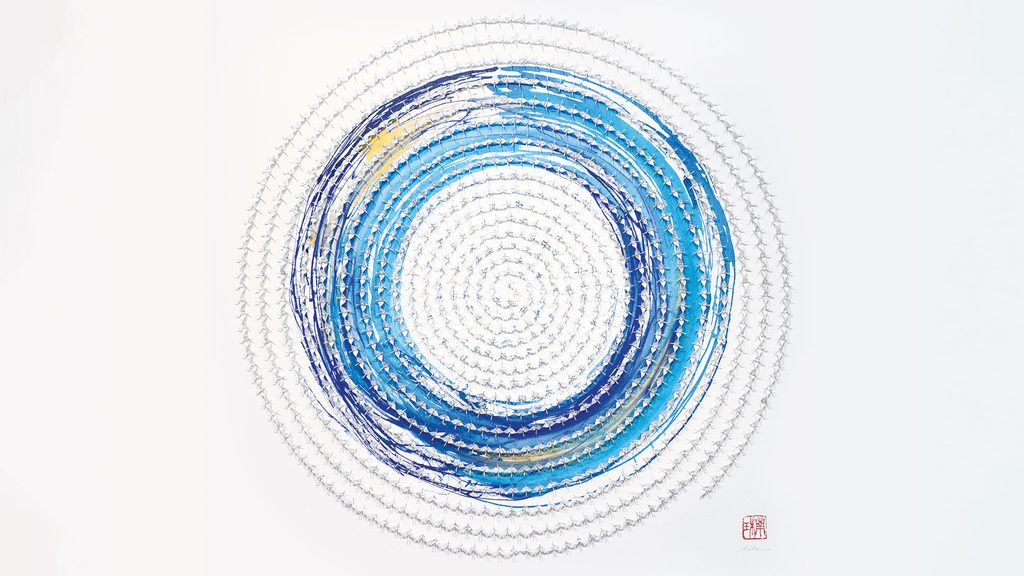
I create sculptural paintings rooted in the ancient traditions of Japanese paper-folding and ink-painting. They are born of a deep human need for connection and intimate contemplation. I invite the viewer to come closer, slow down, and explore.
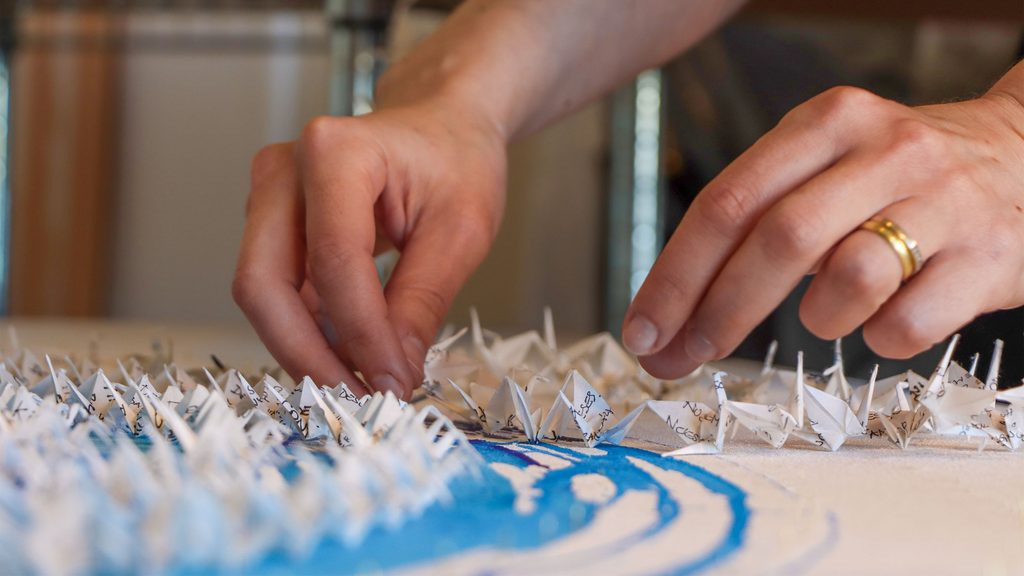
My studies in architecture, Zen, and art deeply permeate my work, which emerges from the interplay of technical precision and deep sensitivity. My practice draws from the centuries-old renzuru technique, one of the most complex forms of Japanese paper-folding.
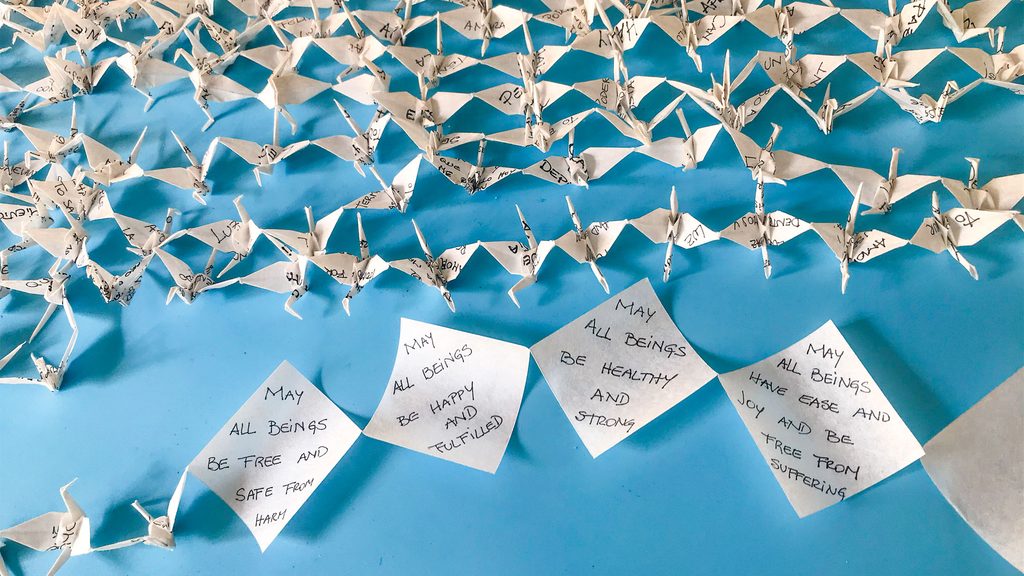
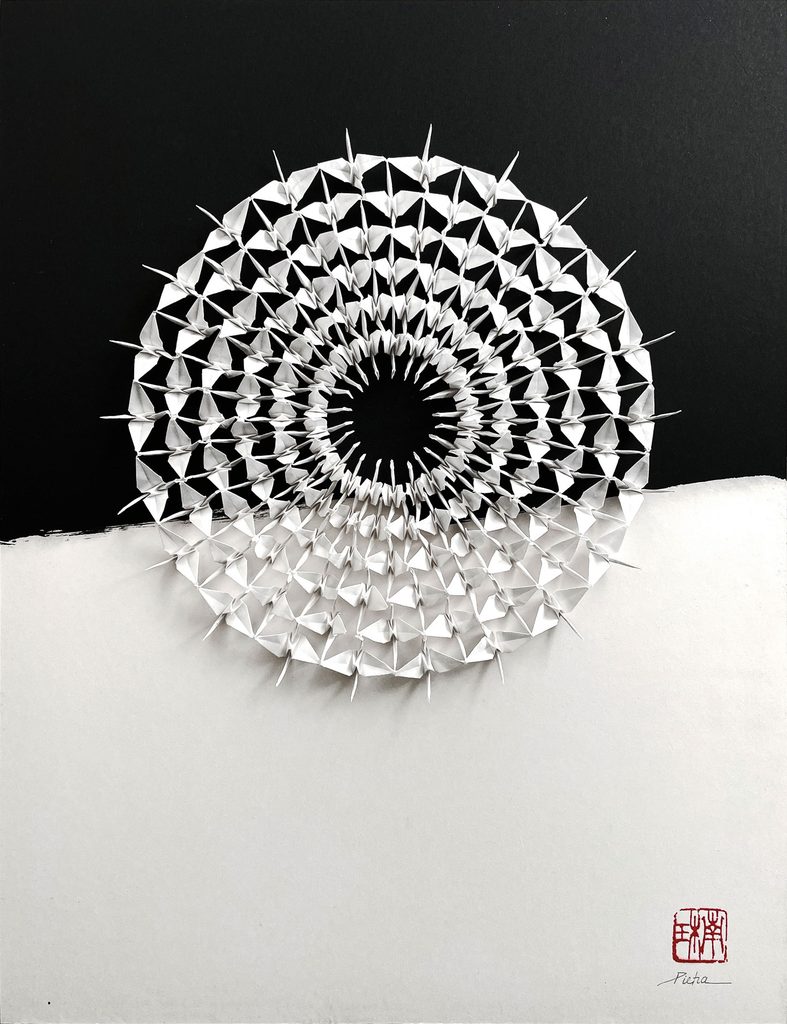
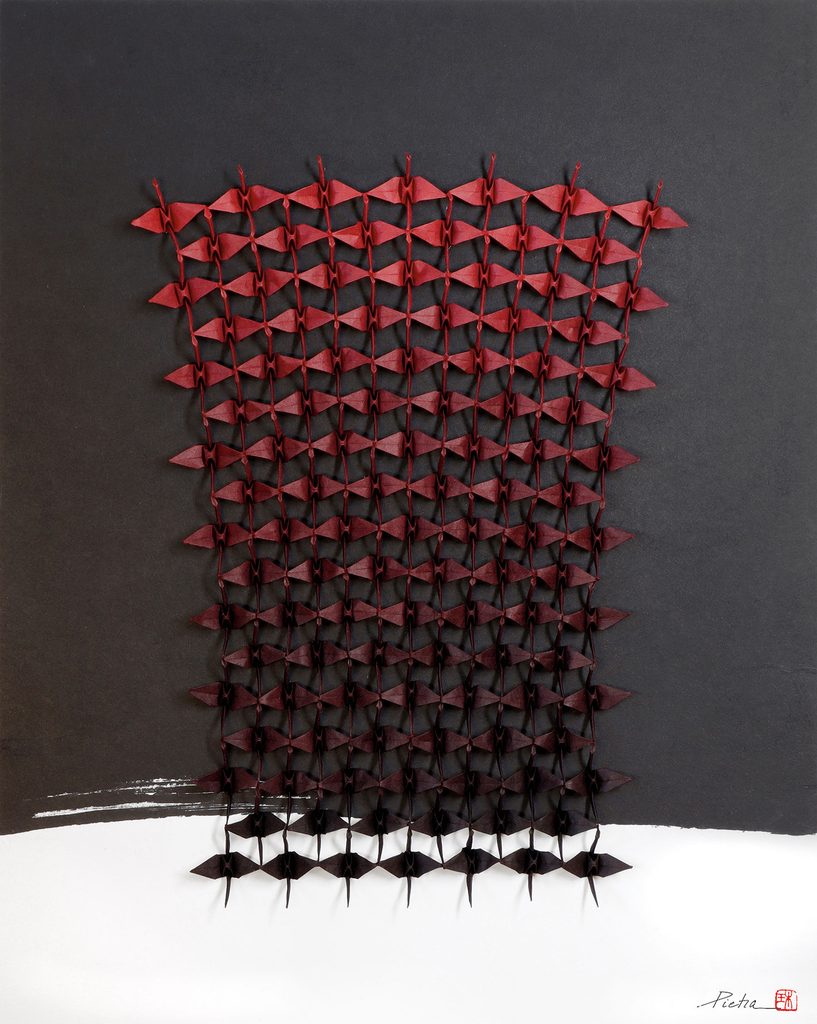
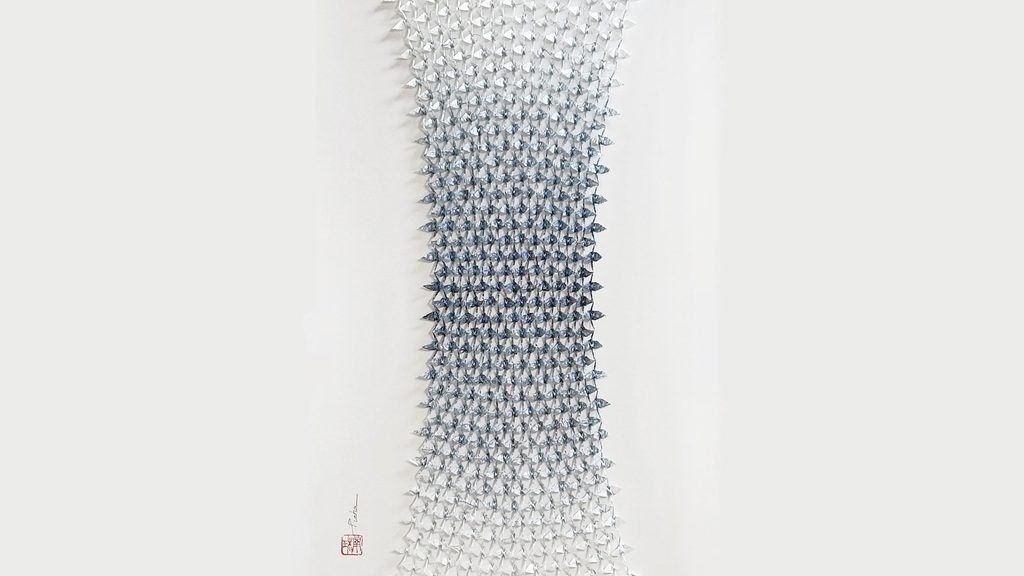
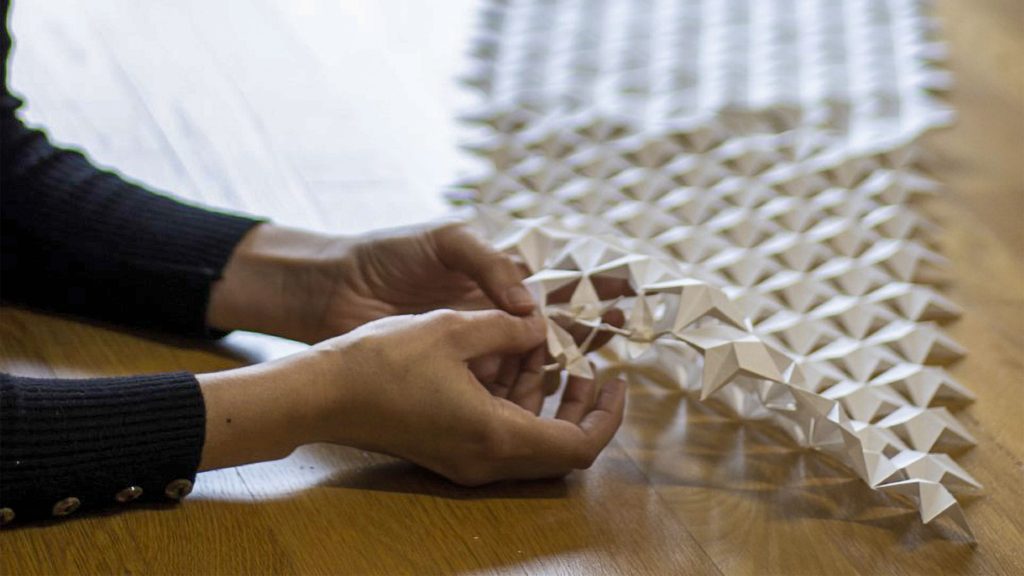
Renzuru, literally “conjoined cranes,” consists of creating interconnected cranes folded from a single sheet of paper. The paper is cut but only in a very specific way, creating a grid of attached squares that can be folded without separating. Each crane is distinct yet part of a continuous whole, physically linked through wing, tail, or beak.
The materials I work with—washi, a type of Japanese paper perfected through generations, and sumi, a traditional ink—carry memory and time within them. These elements converge in a modern expression of contemporary art, bridging cultures and time. East, West, past, and present come together in the intimate subtlety of each brushstroke and fold.
I turn to the thirteenth-century Zen master Eihei Dogen, who said: “To study the way is to study the self. To study the self is to forget the self. To forget the self is to become one with the universe.” For me, in my art, this means “Think the fold. Be the fold. Forget the fold.”
My art is an invitation not to step back and understand but to come closer and feel. To engage with what is minimal, subtle, and almost hidden within the work and within oneself. This is what inspires me, because intimate togetherness with oneself, with others, and with the world can be our deepest yearning and also our greatest fear. It is here, in quiet stillness, that connection can begin to unfold.
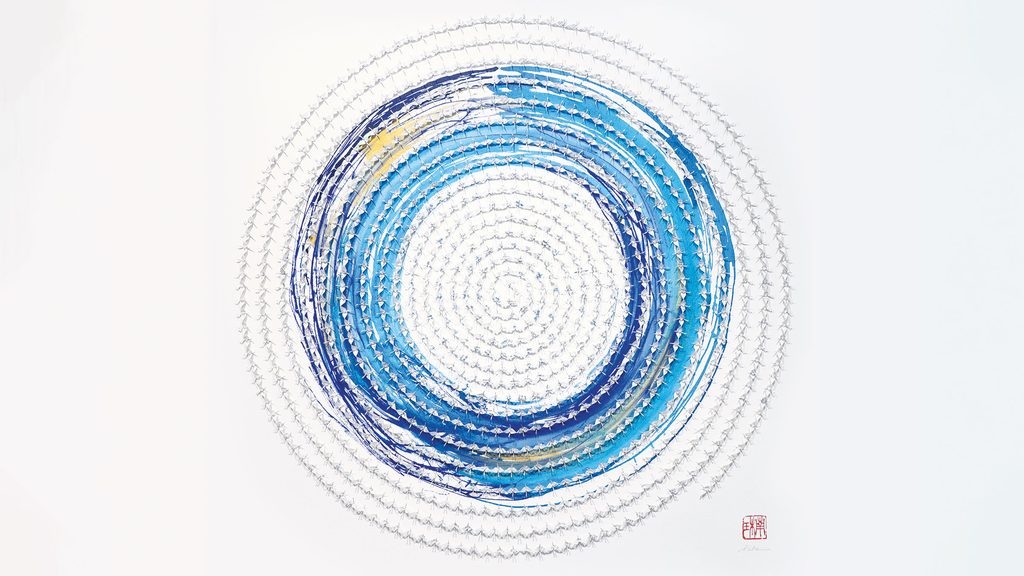
1,000 wishes, 1,000 Cranes
2021, 54″ x 54″, washi paper and ink.
Background: acrylic painting by Kazuaki Tanahashi
GAZE
2021, 18″ x 22″, washi paper and sumi ink.
Igneo
2024, 18″ x 22″, washi paper and sumi ink.
DO
2025, 20″ x 48″, washi paper and indigo ink.
The post The Art of Connection appeared first on Lion’s Roar.
Recent Comments