



Healing doesn’t mean rewriting what happened. It’s about finally embracing it.
“Make the most of your regrets; never smother your sorrow, but tend and cherish it till it comes to have a separate and integral interest. To regret deeply is to live afresh.”
– Henry David Thoreau
At some point in our lives, most of us encounter a memory that feels like an uninvited visitor. You could be driving home, making your morning coffee, or trying to settle into bed, and suddenly a decision from years ago resurfaces. It carries a familiar sting:
What if I had done things differently?
For me, the choices my younger self made would haunt me. They would pop up out of nowhere and paralyze me, leaving me utterly helpless.
It would get worse when I saw someone else live a version of the life that I once imagined for myself. I’d replay the scene in my head, thinking about what I should have said or done differently, as if enough replays could change the outcome.
Most of us, particularly as we get older, carry such a vast archive of choices, hesitations, and dreams. We spend years trying to shrink ourselves, trusting people either too much or not enough, and writing off dreams because life told us to.
We stop living in the present and begin living through the lens of our regrets.
If you are reading this and seeing a little of yourself in it, know that it does not make you weak or foolish. It just makes you somebody who has lived, with all the uncertainty that comes with it.
Why We Need To Quit Bargaining With the Past
I spent a long time thinking of my own history as something that could be negotiated, if I just thought hard enough about it. Whether it was my family, a set of expectations, a level of self-worth I had not yet learned to question, I would loop it in my mind and think of all possible outcomes.
Everything but the truth.
The truth is, my younger self didn’t take her life for granted. She did the best she could with what she had.
And I’m sure your younger self did the best they could too. Acceptance takes time. It comes in parts, in small moments where you see the past for what it is: A decision.
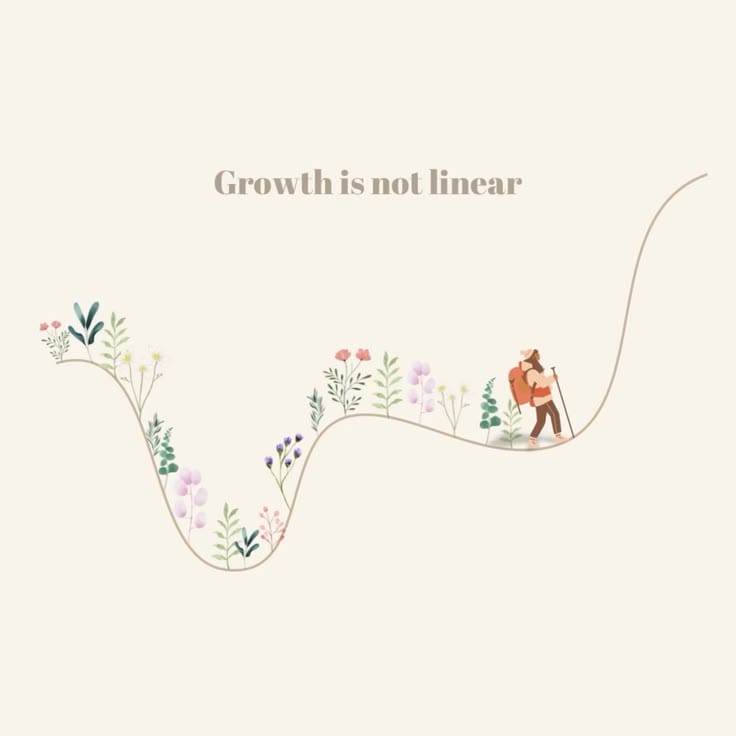
And it’s easier to say, “Yes, I accept what has happened” in your mind, yet get triggered emotionally every now and then. Healing is never linear. It’s sometimes a sloppy mountain that you keep trying to climb.
Here are six practices that helped me soften toward my younger self.
Practices That Helped Me Soften
1. Write A Letter To Your Younger Self
Writing a letter to your younger self can feel strange, as if you’re speaking to someone you barely recognize anymore. But as you pour out your words, you may find that the distance between you and that younger version of yourself begins to dissolve.
- Write this letter to offer the forgiveness you’ve withheld for so long.
- Remind your younger self that they did their best with the tools they had.
- Tell your younger self that you’re proud of their resilience.
- Treat them with the same tenderness you would offer a dear friend who is hurting.
You can start with this prompt:
Or, learn more about How to write a gratitude letter
2. List Three Things You’re Proud Of About Your Younger Self
It’s tempting to simply recall the error and forget everything else from that period. This decision drastically changed your life, and so it keeps coming back to you. So try to recall three things you did well during that same period of your life:
- A friendship you maintained
- A responsibility you carried gracefully
- A kindness you showed someone
With this practice, you are rewiring your mind to notice not just a decision, but other beautiful things that happened around the same time.
You start viewing your younger self as a whole person.
Related Reading: What is your love language with yourself?
3. Gently Express The Truth Aloud

Sometimes I just stand in front of a mirror and say, “What happened, happened. I can’t go back and undo anything, only comprehend it.”
Saying that aloud, rather than just thinking it, seems to let it sink in a bit more.
This helps ground your nervous system in the present moment.
4. Allow Yourself To Take A Break
Do one simple thing today that your younger self was never allowed to do.
For me, this meant saying no to a request without justifying myself, or taking a break in the middle of the day without feeling guilty.
Though it seems very small and simple, it is remarkably effective. It’s a powerful way for you to notice how far you’ve truly come.
5. Talk to Someone About It
Tell someone you trust about the regret you’ve carried the longest. I kept mine silent for years because it made me vulnerable. I thought, “Talking about it would make me recall the shame and embarrassment that the decision caused.”
But I was wrong. When I finally spoke about it with a close friend, I realized how much energy I had spent guarding this secret.
Once you share it with someone in confidence, the negative emotions start to feel far smaller than they seemed in your head. If you find it difficult to open up to someone about things, you can always write it down. A daily practice of putting your thoughts into a journal will help you feel lighter over time.
You can use the Gratitude Journal to write down everything you’d like to.
6. Revisit A Joyful Moment:
Without feeling guilty, revisit one small joy from the past: a song, a location, a dish, or a hobby you liked at the time. Truth is, joy and regret can exist independently. Though you associate that period of your life with regret, some joys existed alongside it.
Reclaiming even one small joy serves as a reminder that the entire era was more than just the error you remember.

7. Practice Honest Affirmations
Affirmations are reminders that prompt you towards positivity. You are more than your mistakes and sometimes, you need a practice to assure yourself.
These were the ones I return to when my past feels heavy:
- “I did my best based on what I knew at that time.”
- “I can grieve what I lost without believing I deserved to lose it.”
- “My worth was never determined by a single choice.”
- “I am allowed to feel both regret and acceptance for the exact same version of myself.”
You could use these affirmations, or try some from our extensive library of affirmations here.
Noticing the Small Things, Even on Regretful Days
On days when the past feels unusually loud, you don’t need to force positivity you don’t feel. It’s okay if you don’t have the energy to put on a brave face.
Sometimes, embracing the storm is the kindest thing you can do for yourself.
You can start by noticing the small wins:
- You made it through today, even with the weight of that memory on your shoulders.
- You found a few minutes to rest, even though it was a difficult day.
- It took immense resilience to keep going all these years while carrying this secret.
It’s okay.
I know it’s difficult, but try to thank yourself.
Look how far you’ve come since that version of yourself made that decision. How beautifully you’ve grown despite it all.
Peace arrives in small observations. Sometimes, it may be an enduring ritual that helps you: the same cup of tea brewed the same way each morning, a walk you take without thinking, a song you return to when nothing else makes sense.
Maybe it’s a cherished memento, something small that still holds warmth after all this time.
Maybe it’s a sanctuary. A room. A bench. A corner of a garden. Someplace that has stayed constant through every shifting season of your life, unchanged even as you have changed around it.
There’s a kind of progress worth recognizing too. The sharp edges of regret, the ones that used to cut so deep, have begun to dull. That’s time doing its slow, patient work.
Choosing to meet those memories in the light, even when it’s uncomfortable, is its own kind of strength.
Give yourself credit for that.
Some days it barely feels like progress at all. Some days, you may feel like you’re over everything.
But sometimes it really can be this simple: a ritual you kept, a memory you recalled.
That’s enough.
You do not have to face everything today. You only need to be a bit kinder to the person you used to be than you were yesterday.
If you’d like to sit with this reflection a little longer, try these journal prompts in the Gratitude App today:
- What past decision is the most difficult for me to forgive myself for?
- What did the younger version of me genuinely need but never receive?
- What would I say to console a friend who made the same decision I did?
- What is one thing I am proud of, despite a past mistake?
- What small joys from that time can I bring back into my life today?
- What would it be like to leave this regret aside, even for a day?
Recommended Reading: How to Build a Safe Space within
If this reflection resonates with you, we’d appreciate your feedback and story suggestions. 💌
Wherever you are in your journey to make peace with your past, I hope you meet yourself with love rather than judgment.
Until next time. 🤍
P.S. Our August Monthly Challenge is live! Check it out here.
Recent Comments