
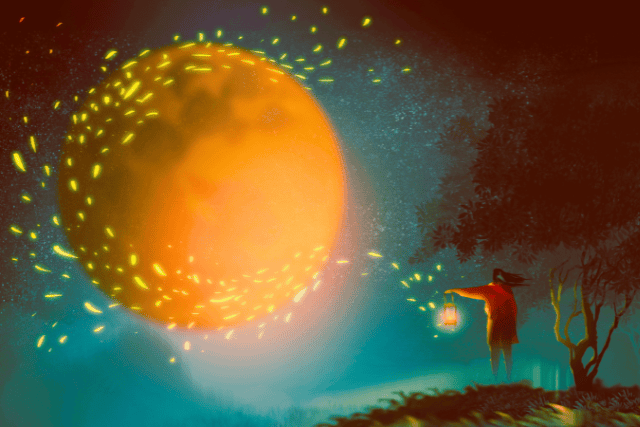

“You cannot rebuild on an unstable foundation.” ~Angelina Crosby-Pigott
On August 22, 2018, my husband collapsed in our bedroom.
Rudy was my best friend and my partner in every sense of the word. His last word was “911.”
I performed CPR while my youngest daughter and my father-in-law stood nearby, and my oldest daughter shielded our four-year-old in another room. The EMTs worked on him before taking him to the hospital, and my father-in-law and I followed the ambulance.
After what felt like forever, a nurse moved us into a small waiting room at the back of the ER. There was no urgency in the building. It was eerily calm.
Eventually, a doctor came in and quietly said, “I’m sorry.”
All I could say was, “Sorry? SORRY? How?”
Everything slowed, and my mind disappeared into a fog. This wasn’t real. It couldn’t be real.
But it was.
This was eight days before our fifteenth wedding anniversary, and our family was already grieving. My eldest son’s father had died just eighteen days earlier. In less than three weeks, all four of my children had lost their fathers.
It took me time to build up the courage to see Rudy. It took everything in me to remove his wedding ring. Then somehow, I was supposed to leave.
I remember walking through the hospital unable to understand how everything was still moving. Nurses continued down the halls. Cars kept driving outside.
Somewhere people were eating, laughing, sleeping, making plans for tomorrow.
How had the world not stopped?
When I got home, my children were upstairs together. I walked into the room and told them their father was gone.
Then I screamed.
It was a blood-curdling scream that seemed to come from somewhere deeper than my body. My soul screamed.
That is what I mean when I say my life burned to the ground.
The grief was unbearable, but I could not completely collapse. My children were grieving too, and I was now the parent still standing.
So I mothered while grieving. I planned a memorial and a funeral while unraveling. I prayed, led, handled paperwork, answered questions, and did what needed to be done even when I could barely breathe.
But my journal told the truth.
Surviving: I wrote down the as-found condition.
I have spent most of my professional life in planning, cost engineering, project controls, and project management. Early in my career, I planned refinery outages from shutdown through startup. Later, I helped manage complex projects worth millions and billions of dollars.
Before you repair a troubled project, you document the as-found condition: the honest current state, not the state you wish existed. If the starting point is wrong, the recovery plan will be wrong too.
Without realizing it, I began doing the same thing in my journals.
I am not sleeping.
I am angry at him for leaving.
I am angry at God for taking him away from us.
I do not know how to do this without him.
A few weeks after Rudy died, I made a list called The Things I Lost When Rudy Died.
My companion. My lover. My best friend. My confidant. My protector. My encourager.
Then came the ordinary things: my mechanic, my grill master, my handyman, the person who shared my private jokes.
I began to understand that I was not grieving only a person. I was grieving an entire life’s architecture built around another human being.
The journal gave me a place to stop performing “fine.” It let me tell the truth about where I actually was.
That was the first lesson of rebuilding: start with reality.
Stabilizing: I made the world smaller.
Less than a month after Rudy died, I wrote, “The days are getting harder as reality sets in. I feel strengthened and broken at the same time.”
I also wrote, “As a planner, I’m always trying to plan ahead, thinking of the future, but now there is no future with him physically.”
Planning was not simply what I did for work. It was how I oriented myself to life.
There was always a next milestone, a contingency, something ahead. Now the future I had been planning had disappeared.
I knew how to plan for risk. I did not know how to plan for absence.
Thirty-four days after Rudy died, I wrote another prayer: Teach me how to rest.
I stopped trying to solve the rest of my life. I reduced the scope.
Take care of my children.
Take care of myself.
Rest.
Do not make every decision today.
One second. One minute. One hour. One day.
Eventually my body told the truth my mouth had been avoiding. My hair began falling out. I had been functioning so well that even I had confused functioning with healing.
It wasn’t healing.
Remembering: I went looking for Angie.
Rudy and I had spent eighteen years together, fifteen of them married. We truly operated as a we, and that was beautiful.
Death ended the we without my consent. Suddenly there was only me.
I had to decide. I had to parent. I had to build a life I never asked to build.
And somewhere in that transition from we back to me, I ran into a question I was not expecting:
Who is me?
As part of my healing, I began looking much further back than my marriage.
I went looking for Angie.
Angie is what my siblings and the people who knew me growing up call me. If someone calls me Angelina, of course I respond. But if someone calls me Angie, I turn around differently.
If you call me Angie, I know you know me. You know my beginning. You know my origin.
I kept thinking about my nine-year-old self. She was fearless. She spoke her mind.
She was independent.
And I realized I could not find her.
I could not remember where I lost her. I could not remember where I last saw her. I could not remember where I put her.
So I started excavating.
I looked for the places where pain had taught me to hide, shame had taught me to dim myself, and fear had taught me that being fully seen could be dangerous.
There was no single moment when Angie disappeared. The burial happened in layers.
I grew up, achieved, served, mothered, built a career, and became very good at carrying enormous responsibility. From the outside, I was functioning extraordinarily well.
But functioning and being fully yourself are not the same thing.
I also spent decades in male-dominated industries, sometimes learning to soften what I knew so I would not seem threatening and at other times becoming harder because hardness seemed to be the language the room respected.
Those strategies helped me succeed. That is why I did not immediately recognize what they had cost me.
My life had burned in 2018. What I had not known was that parts of me had been buried long before the fire.
The fire made the ground visible.
And when I kept digging, I found her.
Angie was still there.
As I reconnected with her, dreams returned. Pieces of my personality returned. I remembered aspirations, stories, and parts of myself I had not thought about in years.
I remembered myself.
But remembering also uncovered pain I had never fully processed, shame I had learned to live around, and things I needed to forgive or release.
I was grieving my husband, and I was grieving how far I had traveled from myself.
Both needed healing.
Rising: I learned joy did not have to wait for grief to leave.
One of the clearest signs of healing was hidden in an ordinary journal entry from those first weeks.
I had written about how broken I felt. Then, almost casually, I wrote: Went to the beach with friends. We had a nice time.
For years I barely noticed that sentence.
Now I think it tells the truth about returning to life better than almost anything else I wrote.
My husband was dead.
I was devastated.
And I had a nice time at the beach.
Both things were true.
Joy had entered the room without asking grief to leave first.
That changed how I understood healing. Moving forward did not mean leaving Rudy behind. Loving the life still available to me did not mean I had loved our life any less.
Strategy helped me make decisions about the life I could influence. But strategy could not return my husband or make reality become something other than what it was.
That required surrender.
Not surrender as giving up, but surrender as releasing my demand that reality change before I allowed myself to live again.
Looking back, I can see a pattern I could not see while I was inside it: survive, stabilize, remember, rebuild, rise.
I did not follow a framework. I lived it first. The language came later.
If your life has become something you never planned, you do not need to solve all of it today.
Start with what is true.
Make the next thing smaller.
Notice what you are carrying.
Ask what you have been hiding.
And if you no longer recognize yourself, look back with tenderness instead of judgment. You may not be gone. You may simply be buried beneath years of becoming who you needed to be.
I could not remember where I had put Angie either.
But she was there.
She had been there all along.
Given the choice, I would choose Rudy. I would undo this loss in a heartbeat if anyone would let me.
But no one will.
So I stopped waiting for my old life to return. I began tending to the life that remained.
And somewhere beneath the grief, the roles, the armor, the fear, and all those years of becoming who I needed to be, I found the person who remained too.
Angie was still there.
And so was I.

About Angelina Crosby-Pigott
Angelina Crosby-Pigott is a cost engineer and project-management professional with more than twenty-five years of experience. After sudden loss forced her to rebuild her life, she began writing about grief, identity, strategy, surrender, and intentional rebuilding. She is the founder of I AM Rising

Get in the conversation! Click here to leave a comment on the site.
Recent Comments