

On the couch, in and out of bad sleep, the silence startled me — that moment when breath becomes air. Over the past seven days, I had concentrated on her breathing. Not my breath. Hers. Silence meant she wasn’t breathing.
I walked over, a hospital bed in the middle of the living room. My mother on it, her face lit by a dimmed chandelier.
What is had arrived.
Frustration is just a part of life. You want something, you don’t get it, you get frustrated. After a bit, the feeling fades. Rinse and repeat, right?
“There was nothing left to do, and I was able to do just that. It was her final gift to me.”
This plays out most of the time, but when big upheavals in life arrive at your doorstep—such as losing your parents and a job and a community in quick succession, as I recently have — managing frustration is your survival.
Often, it is someone else’s survival too.
Being frustrated, and being aware that you are frustrated, might just be the root cause of much of our discontent. Religious philosophy, theology and the meditative traditions, for all their discourse on attention, discontent and coming to terms with what is, has inked very little about frustration, which is odd, since frustration is defined by the existential desire for what isn’t. Most people consider frustration a fickle, passing tide in their emotional landscapes, and thus of lesser import when compared to the big ones—such as greed or dishonesty or anger — but, on closer inspection, that’s not the case. Deeply frustrated people are anxious, angry, unforgiving and greedy for the “right” experience.
Frustration is an emotion of powerlessness and or wanting things to change and feeling powerless that you can’t do anything about it. On this account, frustration arises from an inability to experience what we think we ought to experience. This “ought,” I’ve recently learned, is a fundamental property of mind, which is, for better or worse, always trying to make things better. However commendable, the desire to make things better — the impulse of escape — often makes things worse if not for the simple fact that you can’t escape your mind.
My mother died of Lewy body dementia, the nastiest of kinds. It hijacked her mind and temperament. The disease was mean, dehumanizing and savage. A year before that, my father died of prostate cancer, a years-long decline, and equally savage. Me in Colorado, they in Maryland, I flew back for weeks at a time, as much as I possibly could, to care for them. During these years, I had lost a job and my wife and I were contemplating moving our family across the country. It was a deeply frustrating time.
Caring for my mother, in the weeks I’d visit, was the hardest thing I’ve ever done. On each visit, I entered a Zen monastery without knowing it. I’ve been a rock climber all my life and have done some hard things, and I’ve been a Zen practitioner for 30 years and have made it my life’s work to be patient and dependable and accepting. But what was obvious to me was that my frustration, ever-present in trying to care for her and do her justice, was polluting the last remaining days and hours I had with her.
Perhaps you’re thinking — it’s ok to be frustrated in that scenario. It’s human. Be a human. Yes and no. Feeling powerless was a natural response to my situation, that much is true. But frustration was the very thing keeping me from being there, in the room with my mother, during her final weeks. We were extremely close the entirety of our lives. She deserved better.
What, exactly, was I frustrated about? As anyone who has cared for someone with severe dementia, it’s impossible to put into words and you can only know it if you’ve been there. But I shall try. When with her, you couldn’t leave her side, as she felt unsafe when someone wasn’t in the room. And yet, you couldn’t talk to her either — she couldn’t converse, listen well nor comprehend, and she often didn’t get the point of talking. If you tried to talk to her, after a few seconds you’d get “Ok, I’m done talking now.” You couldn’t make food that tasted right, and because she wasn’t eating, you felt guilty when you enjoyed your meals. She wanted to get up constantly, which required pulling her to her feet, getting her shoes on, fixing her sweater, only to walk four steps and lay her back down, her having forgotten why she wanted to get up.
This routine was constant, all consuming, tireless. Nothing you did helped. It all felt pointless. She’d say you were not keeping your promises for promises you didn’t make, or that you weren’t listening to something she hadn’t said. It was heartbreaking. You could pick up your phone, but, after a minute of doing that, the thought quickly came that you are spending what could be your last minutes with your mom scrolling TikTok. You put down the phone. One time she had me scratch the TV because she had an itch, and she said “thank you.”
The exhaustion builds. The frustration compounds. Powerlessness sets in.
I felt biologically robbed of my right to enjoy food, get exercise, sleep well. I felt emotionally robbed of my rights as a son, and I felt robbed of time, time with her, as if I deserved the right to talk with my mother during her final days alive, or to share stories, or have her say “I love you.” I felt existentially robbed, as she was my last vestige; some of my father’s things were still in boxes.
You get mad at yourself. You feel like a failure. You’re frustrated you’re not a better person. You just want things to be different.
But out of the mud a lotus grows. You need the mud.
One purpose of the “do this do that” daily regime of a Zen monastery is to frustrate you, strip you of you, of your wants and desires and vestiges of idiosyncratic selfhood—the scaffolding of desire, avoidance and the search for what isn’t. In one sense, the point Zen practice is to make you at ease with powerlessness.
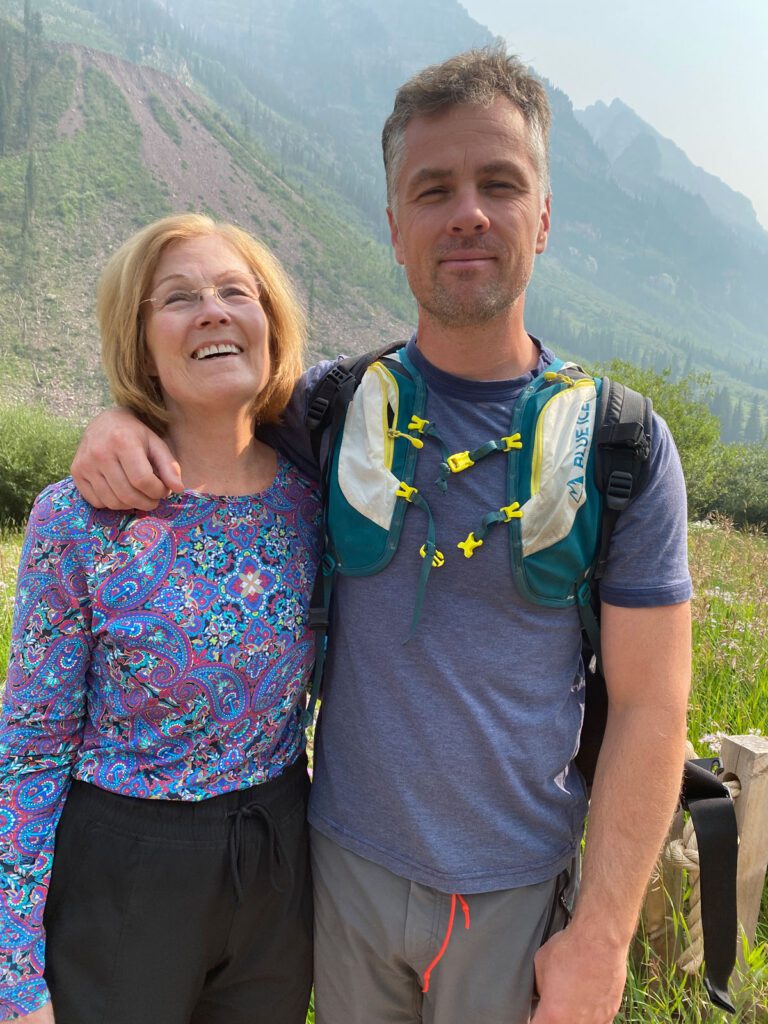
After one visit to care for my mom, I left demoralized and emotionally destitute. On the plane home, I vowed to return as a different person, and with a single goal—to not get frustrated. It was at that moment when I knew, upon return, I’d be going to the zendo to see my roshi. Her home, the zendo; my mother, my roshi. This was now my practice.
Upon my return weeks later, I walked in the door and saw her, my teacher, on the couch, her favorite black blanket over her legs, her frail arms, an inch of gray hair sprouting under decades of auburn dye. I leaned down and gave her, now 87 pounds and dropping, the longest hug she’d allow. Immediately, it was up and down, this that. The disease had now fully hijacked her mind. But this time, I submitted. I smiled. Chop wood, carry water — despite having read this line for thirty years, finally, at that moment, I understood exactly what it meant. Be here, and awake, for it all.
I removed the blanket. I laid it back down. Music on, sure mom. Music off, sure mom. Up to walk for ten seconds, then back down, then again three minutes later. Do this for 12 hours straight, every day. Be up all hours of the night. When frustration arose, and it did, it was like being smacked by a kyosaku, a stick used by zen masters to strike the back of meditating (and sleepy) students, to keep them alert and focused. I focused on doing the task, the what is that needed to be done, with naked attention.
The moments were transformed; or, better put, I found the moment. We were parting together now, here, rather than apart; her mind hijacked, my mind un-hijacked — that’s where we met.
With ears unplugged, I heard my mother’s voice again. With my heart opened, I felt her love in words and gestures I couldn’t before. With eyes unclouded, I saw her again, her true self, my roshi, and, so I tell myself, she could have the son she needed. Sensation — the less it is obstructed, the more powerful it is.
Tatatha, suchness, what is. Frustration out, the world rushed in.
In her final week, I held vigil on the couch, shifting the pillows under her every two hours. All through the night, in watchful consciousness, I listened to her breathing. It was my point of meditation. Then, finally, that silence was born. It had arrived, the moment life demands of all of us, and it was beautiful. There was nothing left to do, and I was able to do just that. It was her final gift to me. The great teacher she was, she knew I needed it.
The post Chop Wood, Carry Water, Care for Your Mother appeared first on Lion’s Roar.
Recent Comments