
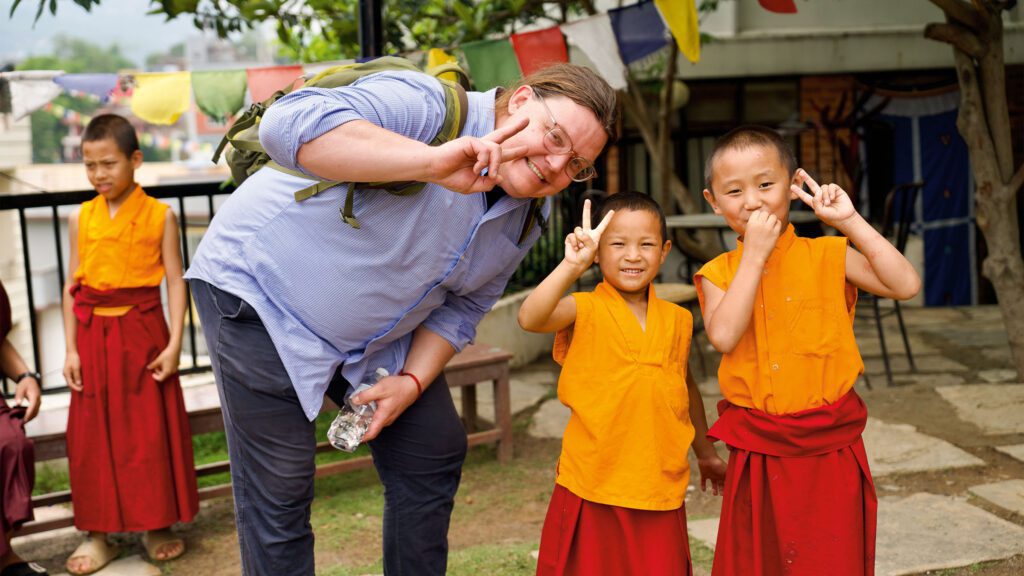
About thirty educators, researchers, school founders, publishers, and longtime Buddhist practitioners gathered at Forest Creek Refuge in Oregon this past April to explore a deceptively simple question: What might Buddhist education for children mean in the twenty-first century?
The gathering, organized by Khyentse Foundation and Forest Creek Refuge, took place against a backdrop of growing unease about the state of children’s education. Teachers are burned out and leaving the profession. Parents worry about children’s decreasing ability and opportunity to focus, along with the rising levels of anxiety and loneliness among young people. Schools face mounting demands while struggling to meet the ones they already have. Beneath these concerns lies a larger question: What, exactly, are we hoping education will accomplish?
Those who gathered at Forest Creek Refuge share a conviction that Buddhist traditions have something valuable to contribute to this discussion and that building understanding, alignment, and collaboration can serve to strengthen the field.
The conversations ranged widely. Some participants focused on introducing children directly to Buddhist teachings, stories, and practices in age- and context-appropriate ways. Others placed greater emphasis on the adults in children’s lives. A child may spend thousands of hours in the presence of teachers; parents, too, are central to introducing and shaping morals and culture. If teachers and parents are themselves distracted, exhausted, or disconnected, how much can any curriculum accomplish? Research presented at the gathering suggested that teacher presence may matter as much as—or even more than—the curriculum itself in contemplative educational settings.
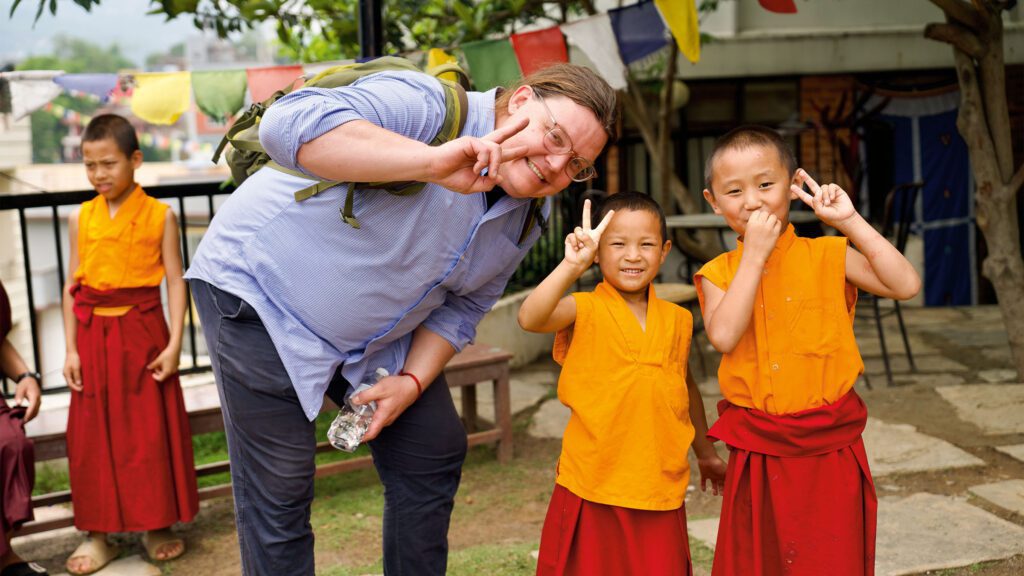
However, this was not a disagreement between opposing camps. Most participants seemed to believe that children benefit from both thoughtful introductions to Buddhist teachings and from grounded, caring adults whose more mindful classrooms create space for better outcomes across subjects and developmental goals. Yet the distinction pointed toward a deeper question about how values, habits, and ways of seeing the world are passed from one generation to the next. Is Buddhist education primarily about what is taught? Or does its deepest influence emerge through the relationships, environments, and examples that surround a child every day?
Three days of discussion did not produce a final answer, nor was that the purpose of the gathering. Participants represented different Buddhist traditions, educational philosophies, and approaches to practice. Some work in explicitly Buddhist schools. Others bring contemplative approaches into secular settings. Common among them was a similar concern: how to help children develop the inner resources needed to navigate a world that often rewards distraction, speed, and reactivity.
Of course, this work has deep roots that preceded the Forest Creek Refuge gathering, and it continues to evolve through the efforts of many people who have dedicated their careers to it. The gathering itself represented only a small portion of the myriad voices shaping the field today—including researchers, nonprofit leaders, curriculum developers, publishers, parents, and others whose work is equally vital to the broader conversation about Buddhist education.
To carry the inquiry further, Lion’s Roar’s Andrea Miller recently sat down with four educators who took part in the gathering—Michelle Macioce, Karman Mak, Rachel Steele, and Justin Kelley. Their perspectives offer a few of the important angles from which this work is unfolding. What follows is their conversation on Buddhist education: what it is, how it works, and why it matters now.
Andrea Miller:What is Buddhist education?
Justin Kelley: I think it’s education that embraces Buddhist wisdom and contemplation in a way that transforms the learning journey. A Buddhist approach to education embraces principles like interdependence, impermanence, love and compassion, and different meditative practices. It’s infusing those principles and practices into the education process.
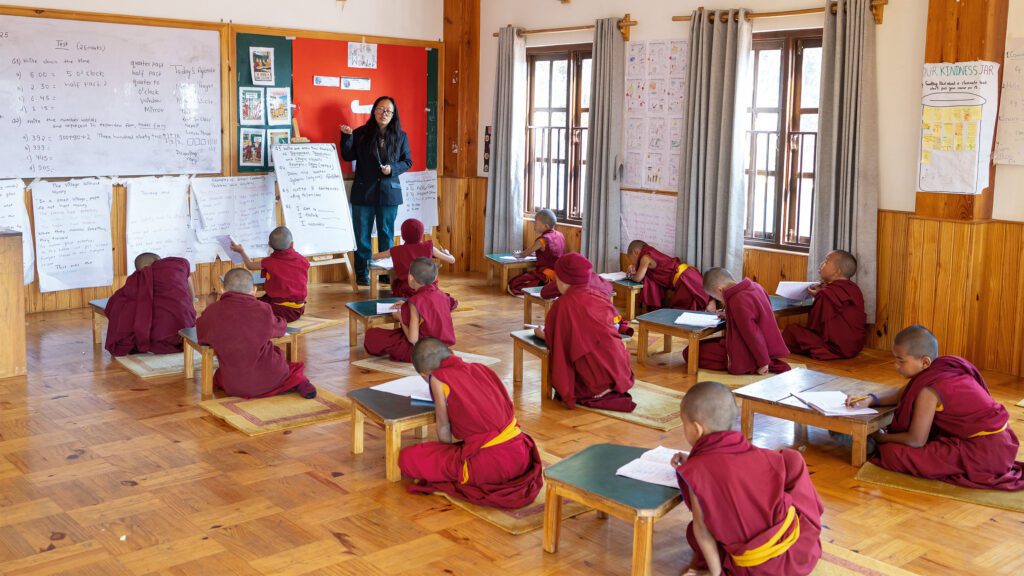
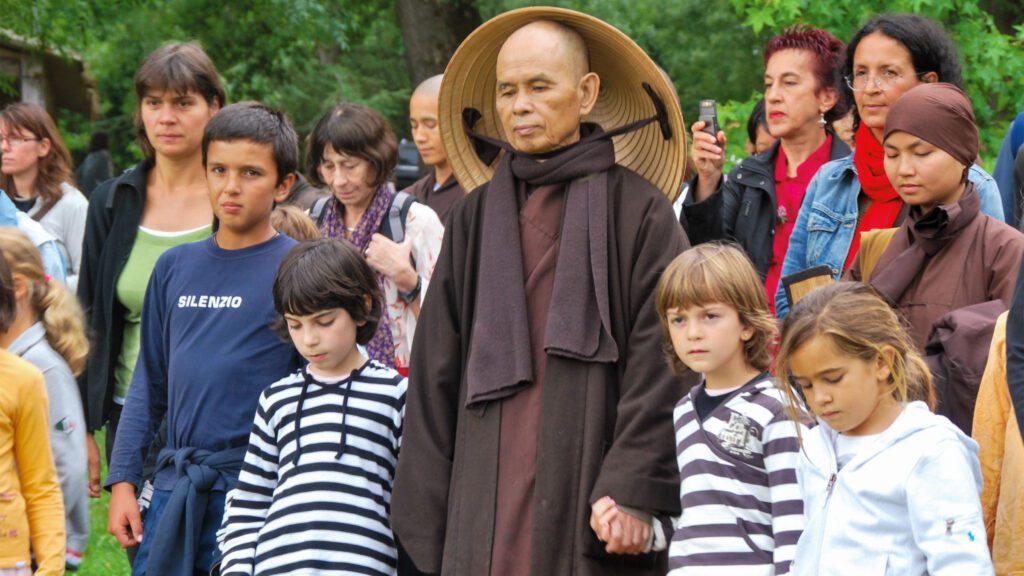
Karman Mak: I’m with the Thich Nhat Hanh School of Interbeing, and for us, Buddhist practices and ethics are ways to care for oneself and the world. Especially in these times of great change and suffering, it’s important that we are able to stay steady in ourselves. So, in our school, we work on thinking about, understanding, and caring for ourselves, caring for each other, and then caring for the world as a way to transform the world.
Rachel Steele: At Alaya Preschool in Boulder, Colorado, where I work, and at Naropa University, where I was trained, the nature of Buddhist or contemplative education is a constant question. I think it begins with our relationship with ourselves as educators—how we work with and relate to ourselves. With the ground of mindfulness, we can be awake to what’s arising in the moment.
Michelle Macioce: Teachers’ motivations, their attitudes, and their inner lives are of the highest importance. No Buddhist curriculum or approach is going to work unless we really cultivate the teacher’s practice as the essential link.
Karman Mak: Awareness and presence are the secret sauce of being a good Buddhist teacher. Because teachers are present and aware, they can model what presence is for the students. They can help the student say, “I’m really mad right now. Let me take a breath and respond in a way that is not reactive.” The teacher can help the student take a chosen action, a chosen response.
Rachel Steele: Buddhist education really does come down to the presence of the teacher and how they are interacting with students, moment by moment. When the teacher has a relationship with their own mind and emotional states, they can meet what arises with young children with the appropriate action, as opposed to a reaction.
Children often experience people being reactive to their behaviors, and I think nonreactivity is the magic of a teacher who’s aware of their own mind, their own emotional states, their own baggage. It’s not that these things don’t arise, but you acknowledge them and breathe through whatever it is that’s arising. I see that this child is dysregulated, and I can feel dysregulation rising in me, but I have the tools to reregulate and support this child in what they need in this moment.
That’s the way I see contemplative education manifesting with young children, and I think it’s deeply important. It should be the future of how we work with young children, because so much happens when children are young that we don’t even realize the impact of. It’s not about the child but about the people relating to them.
Is it important for teachers to receive a full Buddhist education themselves?
Karman Mak: We want our teachers to be practitioners. This is about the practice of mindfulness, awareness, and compassion and care. Those are the markers of Buddhist education, so we’re hiring teachers who have those practices because we want the kids to have them. If we want kids to have awareness and truly embrace and care for themselves, the conditions around them need to be that way. Teachers who embody that can bring alive what the practice is for the kids.
Rachel Steele: At Alaya, I don’t necessarily have the luxury of hiring Buddhist practitioners. But when I sit with someone I’m interviewing, I can have a feel for how they approach the world, their ability to self-reflect, and their openness to the view we hold at the school.
View and practice track very closely in how mindfulness manifests. So, at Alaya, we have principles of practice based on Buddhist thought that are posted in every classroom and are read at every meeting. Even if our five-minute meditation in the morning is all the practice teachers do, our environment is imbued with this view and supports them to be in this deep presence.
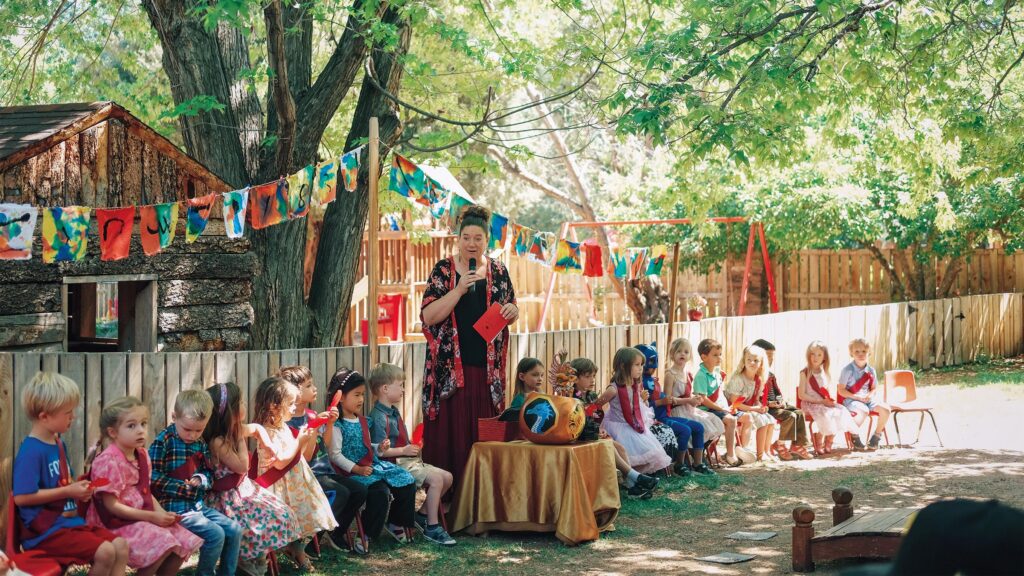
When people meet with someone who is in presence, they come into presence themselves. The families and children experience something at the school they often describe as magic. Genuine presence is such a precious thing, and when people are building genuine relationships based on presence, magic is what they experience.
Michelle Macioce: Social and emotional learning (SEL) approaches have been around for decades now and have been trying to approximate the Buddhist view using more secular and, one might argue, diluted methods. I think the closer we get to the actual Buddhist view, the more people will be prepared to receive the immensity of what the Buddha’s wisdom offers.
If you are actually studying and applying the complete teachings, then even if you decide not to teach all of the higher or more complex teachings at your school, much of it will still come through, because it lives in how you are. You don’t always have to talk about Buddhism explicitly. Something is conveyed even in washing dishes together.
What does Buddhist education look like at different ages, from early childhood all the way up?
Rachel Steele: The Buddhist environment is very light with young children. We sit at the table together and hold space by ringing the gong, taking a breath, feeling our feet, and doing a body scan. These are very simple practices that we bring to children. They’re three- to five-year-olds, so we’re not meditating with them. It’s just about experiencing that moment of pause and the presence of the teacher in that moment.
When you talk about children, you cannot exclude parents, because they’re part of the equation too. A big part of the work we do is relating to the parents. We want to offer a view that supports them in their parenting, that offers the idea that parenting can be a practice. We are all working on the same challenges with our own minds in how we want to relate to the children. We can’t disconnect the child from the family. We have to hold the entire piece.
Justin Kelley: The way you’re going to talk about the dharma with an adolescent is going to look really different from how to speak to a seven-year-old, let alone an adult. However, I subscribe to a basic principle: There’s no aspect of the teachings that is inappropriate for any age; all you need to do is attune to the way that someone can receive it.
For example, if you take the teaching that the fundamental nature of all beings is basically good, you can express that to preverbal children by the way you relate to them. Then once they’re verbal, you can use language like “the little Buddha inside” them. At a certain age they kind of jive with that. Then later on, you can use a little bit more conceptually dense language, once their intellect gets engaged. So, we teach all the Buddhist dharma, but how we teach it varies at different ages.
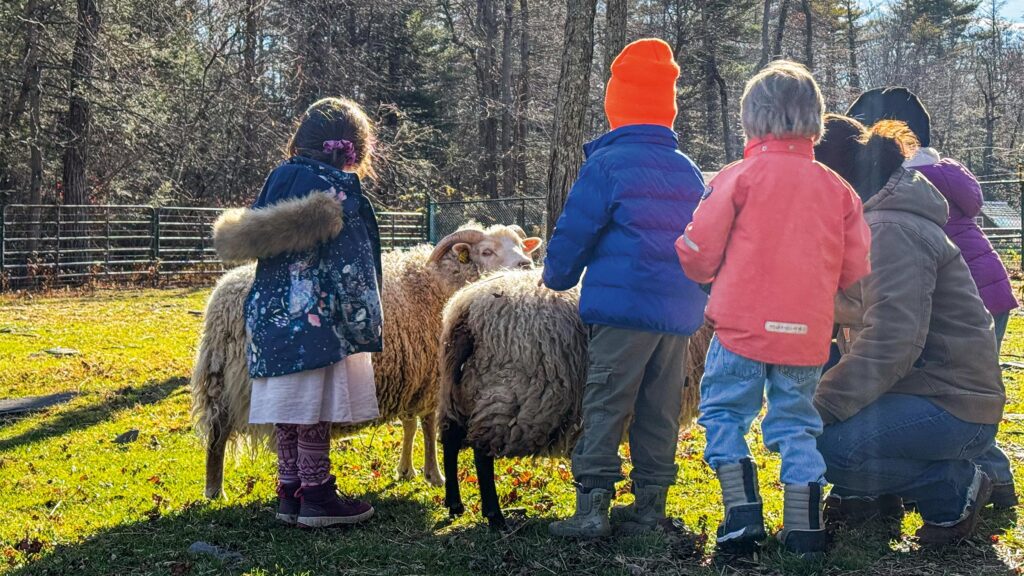
Karman Mak: The extensive teachings of Buddhism make it possible to have really rich project-based units and lessons. We can teach math through the concepts of interconnection and interbeing, and even nonexistence. It’s so cool that these universal Buddhist concepts can be connected with academic subjects like math, science, English, and history. The student goes to school and says, “Oh, my gosh, I’m learning about what it means to be interconnected, and I learned about it in math class, I learned it about it in English and science and history. We were at a farm, and we were talking about the interconnections with everything at the farm.” I think there’s a great opportunity to make academic learning very rich based on our Buddhist practices and principles.
Michelle Macioce: When we talk about what Buddhist education is, we often skirt around wisdom, the truth of emptiness, or shunyata. The path exists for liberation from suffering, and unawareness is the source of suffering, so education informed by a Buddhist view needs to target that root and create conditions for children to become free from it. Yet the closer we get to the absolute view, the harder it becomes to articulate, especially to those who haven’t practiced. So, we tend to speak about the most practical aspects, while what we’re really doing is preparing students to receive the vastness of the Buddha’s teachings.
Justin Kelley: Maybe I’ll contradict what I said earlier that you can teach anything at any age. I talked with the Founder of Tergar Schools, my teacher, Mingyur Rinpoche, about what to teach my own children, and he said, “Just don’t teach them emptiness, just don’t go there.” His point was that you should not teach about emptiness until they’re developmentally more stable. You have to wait until the self has kind of coalesced and they have some self-confidence. Then you can start to break down their concept of a separate self. But you can’t do that when they’re too young.
I’m wondering how Buddhist education differs from general moral or mindfulness education that is already offered in many schools.
Justin Kelley: A lot of the existing mindfulness programming that’s in schools is supplemental to the curriculum, so it’s an add-on. You’ll have your mindfulness class, or there’ll be a teacher within the school that’s designated as the mindfulness teacher. This is great, but the real critical element is the community—how the school is developed, how classrooms are designed, the ethos that’s held at the school. What our projects are pushing toward is a more comprehensive vision for what could be imbued within the educational process.
We’ve been wrestling for the last couple of years with some neuroscientific studies out of the UK and Denmark that have come back to suggest that mindfulness education might not actually be as effective as we originally thought it was. They’re suggesting that they didn’t see increases in emotional regulation and well-being with students, and it makes sense to me that they didn’t, because if you just kind of add mindfulness on, it gets compartmentalized, and kids can tune it out, versus what our schools are aspiring to, which is much more comprehensive. That’s true at least of Tergar Schools, the organization I’m part of.
Rachel Steele: There’s a danger in looking at contemplative practices simply as tools that can be applied in classrooms to alleviate challenges. It’s fantastic that there are programs in schools that teach children to take a breath or encourage teachers to have a moment of silence. These practices alleviate stress and help children with focus. But I think true contemplative education, true Buddhist education, is not something that’s applied but something that’s lived.
We have to meet the whole situation in a contemplative way, not just some problem. Ringing a gong in itself is not contemplative. It’s how the teacher rings the gong—how the teacher engages with ringing the gong—that brings it alive. True Buddhist education is comprehensive. It’s not just, “It’s really rough in my classroom right now. Maybe I’ll ring the gong.” It’s a vision.
Karman Mak: And it’s a transmission of culture. We need to rethink how humanity can be, because there are so many ways humans are hurting each other and the earth. We are trying to re-envision how the future can be different. The kids in our schools grow up in nourishing cultures that build their sovereignty, so they are ready to hold, process, and move through the challenges of the future.
The mindfulness and SEL programs in mainstream schools are add-ons. They do not really get to the heart of the teachings, which are about interbeing and interdependence, about knowing we have impact and practicing nonharming. These concepts are not alive enough in our schools, they’re not alive enough in our culture.
We’re building schools that are magnifiers of compassion, and we can build more around the world. Imagine how powerful that would be.
Rachel Steele: One of our principles at Alaya is the acknowledgment of suffering. I tell parents who come to Alaya that we’re a contemplative Buddhist-based school, but don’t expect that it will look all contemplative and quiet. It may actually be louder than a lot of schools. It may be wilder and crazier because our teachers have worked with themselves to be able to hold a great amount of chaos. Conflict is allowed to arise and be worked with. The full spectrum of human experience is addressed in Buddhism. You may have a list of nice things that you put on the wall, but when it comes to actually addressing the realness of being human, there are challenges we have to be with constantly, and suffering is part of it. That’s an important difference from mainstream education.
Why do you believe Buddhist education is needed for children, teens, and young adults today?
Karman Mak: We see all the reports about youth mental health—there’s increasing anxiety and self-harm. Because of social media, and now even AI, there’s this overemphasis on external approval. So, practice is about taking care of oneself and knowing how to care for the parts that might be triggered. With Buddhist practice, we’re able to be like, “I can choose to turn on my phone and look at it, or I can take a breath, and I can still choose to turn on my phone, but I know that I’m in compulsion to do it.” It’s about building agency or sovereignty to make choices, and I think in our world today, teaching kids their own sovereignty is so important.
Michelle Macioce: It’s radical, because everything teaches them that they’re not sovereign. Everything teaches them that they’re just fodder for the algorithm. They have very little sense of sovereignty.
Justin Kelley: There’s an element of unpredictability in the world today. It feels like if you had asked me five years ago what the world was going to be like today, I don’t think I would have come up with a picture like this, especially with artificial intelligence. The introduction of it has changed everything—changed our questions, changed the problems, changed how we problem-solve. And then there’s the environmental degradation. There’s political turmoil.
There are so many concerns that it’s difficult to make predictions. So, we like to say we can’t prepare children for every future, but we can prepare them for any future, meaning that we can instill within them skills that are adaptable, so regardless of what they face, they’re going to at least have a better chance to address it. I think that’s the big calling for us.
We’ve been distinguishing Buddhist education from other forms of education, but there are a lot of people out there who want to do the same thing. They’re taking different tactics, and I applaud them for it. We most certainly need some help.
What changes and insights do you see emerging in children or teens who receive a Buddhist-informed education?
Rachel Steele: High schoolers who have graduated from Alaya say what they learned is how to become a good friend—how in this age of distraction and loneliness to feel connected to others. Graduates who were in my class often come up and give me a hug of gratitude.
Karman Mak: The monastics at Deer Park Monastery, Thich Nhat Hanh’s center in southern California, hold a teen retreat every year. They have dharma discussions and dharma sharing, and the teens make a commitment to put away their phones at the beginning of the camp. What I’ve heard about the transformation is that at the end of five days without their phones, they’re starting to realize, “Oh, my phone is not my appendage.” It’s a simple thing, but it points to the truth that we are so caught, and we don’t even know we’re caught. It comes back to the insights we’re building about relationship, community, and connection.
I’ll give another example. My dear friends Alicia and Owen moved to Deer Park Monastery in California with their three-year-old son, Ari. Everyone knows little Ari, and they’ve really helped him in his practice. They’ll ask him, “Hey, Ari, where’s home?” And he’ll point to himself and say, “Home is right here in my body.” It’s so beautiful and so powerful if we have kids who are able to say, “I am home in my body. I’m home in this present moment.”
There’s this piece about connecting and service and community that is so lacking in our current world today, and it’s causing the loneliness epidemic. But, with little Ari, he’s getting a sense of his own belonging and his importance to the community as a community member, because he contributes. That is an important thing that we’re losing in our society. We pay for services. People do stuff for us. We just expect, “I’m not going to do that, someone’s going to do it for me.” What our schools are aiming to do is help kids rediscover their humanness, and our humanness is our relationships.
We have to learn how to take care of each other. Some things about technology are pushing this concept of relationship further and further away, so I don’t have to talk with you if I disagree. I can just argue with you online, or I can ask AI to affirm my thoughts. Why are we so divided? Why are we not able to talk to each other? It’s because we are losing these skills of communication and being able to withstand discomfort with other people’s thoughts and being able to withstand being annoyed at someone. The world is like, “You have the power to not be disturbed,” but that’s not true. That is not community. We’re going to be disturbed! We have to learn how to care for it. We’re teaching kids how to do that.
Michelle Macioce: If you ask the families of the students who graduate from these programs, you’ll find a recognition of some of the deeper qualities that have been cultivated—the ability to self-regulate, to do creative conflict resolution, to be a resource for others, to feel at home in their own skin. These qualities are among the greatest forms of wealth for a human being. They’re embodying these qualities and becoming lighthouses for others.
The post A New Vision for Education appeared first on Lion’s Roar.
Recent Comments