

When I was little, I often felt as though I lived in two completely different worlds.
My parents’ home was like an ice castle. Everything looked beautiful. Everything was orderly. Everything appeared exactly as it was supposed to. But it was cold.
My mother rarely let me do what I genuinely wanted to do. Instead, I was expected to only do what had to be done.
Many evenings I went to bed exhausted, frustrated, or quietly holding back tears.
Whenever I complained, my mother would simply say, “You have to endure it. That’s how everyone lives.”
Then there was my grandmother’s world.
Her home was filled with warmth.
It was never perfectly tidy because she was always creating something—baking, sewing, planting flowers, or trying a new recipe simply because it made her happy.
She cooked what she genuinely enjoyed eating, and she never forced me to eat food I didn’t want.
She adored animals.
On warm summer nights, she loved sleeping outside in the garden beneath the stars and always invited me to join her. My mother never allowed it.
My grandmother wasn’t perfect. But she taught me something my nervous system has never forgotten:
Balance.
You don’t have to force yourself through everything. Some things flourish when they’re done with inspiration instead of obligation.
And when the day has already been stressful, don’t continue the race after you get home. The day may have been exhausting. Home doesn’t have to be.
Take a warm bath. Eat something you truly enjoy. Wrap yourself in your favorite blanket. Go to bed early.
Sometimes healing is much simpler than we imagine.
We’ve all had those days. The kind that leaves you emotionally drained before dinner.
Your shoulders ache. Your thoughts refuse to slow down. And all you want is something—anything—that will make the stress disappear.
Unfortunately, many of the habits we reach for after difficult days don’t actually help us recover. They simply distract us long enough to postpone what we’re really feeling.
From my own experience, here are five habits that quietly make tomorrow even harder—and the healthier alternatives that help your nervous system truly reset.
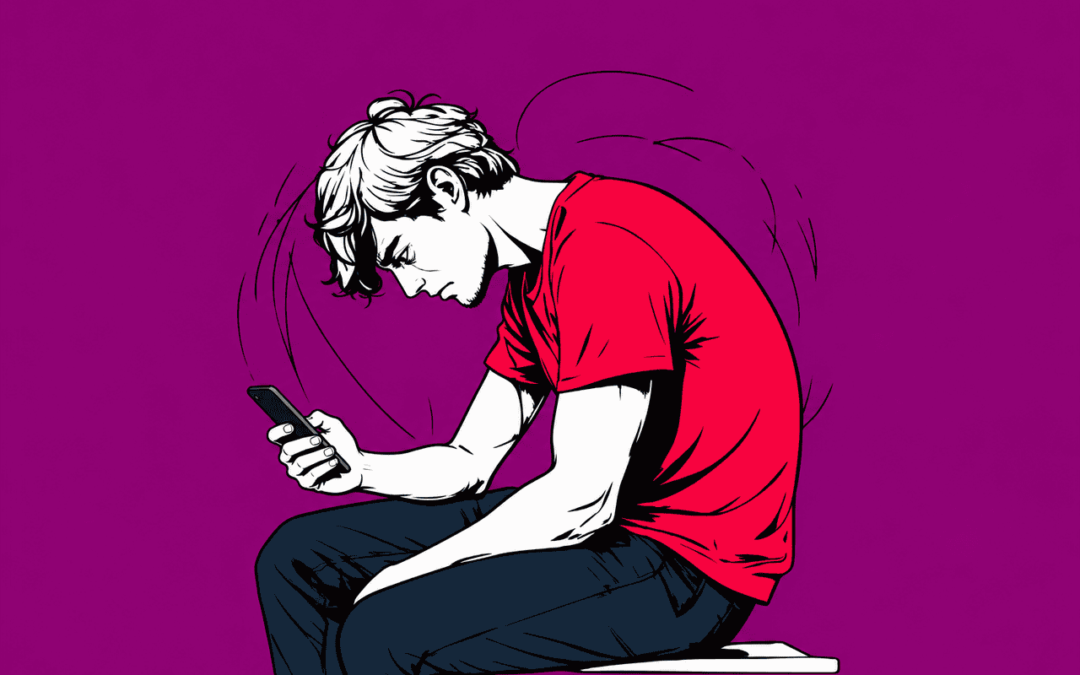
1. Scrolling until you forget why you picked up your phone
It feels harmless. Just a few minutes on social media. Then thirty minutes become two hours. Instead of feeling rested, you somehow feel even more overwhelmed.
Our brains often look for distraction because slowing down means finally noticing how emotionally exhausted we really are.
And perhaps the strangest part? The algorithm rarely shows us what we actually wanted to see.
Instead, it floods our minds with endless recommendations, strangers’ opinions, and content we never asked for.
That’s why I now rely on much simpler rituals. The kind that quiet my mind instead of filling it. The kind that gently return my attention to myself and my own inner world.
Try this instead.
Do absolutely nothing for ten minutes.
Make yourself a cup of tea or whatever feels comforting.
Watch the sunset. Few things are more beautiful than watching the sky slowly change colors. Even better if you can share the moment with someone you love.
Sit beside an open window.
Spend a few minutes near water.
Take a bath.
Take a shower.
Your nervous system doesn’t always need more stimulation. Sometimes it simply needs silence.
I especially love being surrounded by nature and water.
Even spending a few quiet minutes in the small green space near my apartment helps my body relax.
I don’t live in a house with a garden like my grandmother did, and I can’t place a bed beneath the stars the way she loved to. Sometimes I miss that.
But I’ve noticed something surprising. Choosing not to scroll Instagram gives my mind far more inspiration than thirty minutes on Pinterest ever could.
2. Ignoring your emotions
Many of us learned to wear emotional masks long before we became adults.
“I’m fine.”
Even when we’re not.
“It wasn’t that bad.”
Sometimes that’s simply another way of saying, “I don’t believe I deserve better.”
“I’ll deal with it tomorrow.”
Occasionally, that’s a healthy choice.
But when tomorrow becomes next week and next month, our emotions don’t disappear. They wait.
Eventually, they can return as anxiety, irritability, exhaustion, or emotional numbness.
Healing begins the moment we allow ourselves to say one simple sentence:
“Today was hard.”
Many of us were taught that being strong means pretending we’re okay.
In reality, acknowledging your emotions is one of the strongest things you can do.
I wore that mask for most of my childhood. My mother believed that maintaining the appearance of “everything is fine” was simply part of life.
I was expected to smile, even when I didn’t feel like smiling. Maybe that’s why, as an adult, I no longer force myself to pretend.
If I need to cry, I cry.
And I’ve never asked my daughter to pretend she’s okay when she isn’t.
I want her to know that every emotion has a place. That feelings don’t make us weak. Pretending they don’t exist does.
3. Treating stress like a personal failure
We often see stress as proof that we’re not strong enough.
We criticize ourselves for feeling overwhelmed instead of asking a much more important question:
What overwhelmed me in the first place?
Stress is information.
Sometimes it tells us we’ve taken on too much. Sometimes it tells us we need rest. Sometimes it reminds us that our boundaries quietly disappeared.
And sometimes, the stressful day wasn’t entirely our fault.
We can’t control other people’s behavior. People ignore boundaries. They disappoint us. They create unnecessary pressure. The only thing we truly control is how we respond afterward.
When I was little, my grandmother used to joke that emotions were like tiny worms.
“If you keep them trapped inside,” she’d laugh, “they’ll start nibbling at you from within.”
Because of her, those little ‘worms’ never had the chance to stay inside me for very long.
I’m not afraid of my emotions anymore. I love every one of them. I let myself feel them. Then I let them go.
I don’t carry yesterday’s stress into tomorrow. Each morning, I try to begin again—as if someone has placed a clean sheet of paper in front of me.
4. Trying to earn rest
Many of us believe we have to finish just one more thing before we’ve earned the right to rest. One more email. One more load of laundry. One more hour of work.
The problem is that one more thing rarely stays just one thing. There’s always another task waiting. Another notification. Another reason to postpone taking care of ourselves.
The finish line keeps moving.
We forget that rest was never supposed to be something we had to earn. It’s a biological need.
Your brain can’t recover while it’s constantly waiting for permission to slow down. And the truth is, very few people will stop to protect your well-being if you never do.
That’s why putting yourself somewhere near the top of your own priority list isn’t selfish. It’s healthy.
No one has ever found lasting happiness by treating life as one endless race.
I know that because I lived that way for a while.
At first, it even felt productive. I believed I was working hard. I believed I was doing everything I was supposed to do. But after some time, I began to notice something.
Many of my days were filled with automatic habits that consumed my time without bringing meaningful results. I didn’t recognize them until I slowed down.
That’s the strange thing about constantly rushing. When you’re always running, you rarely notice where you’re actually going.
Our minds are full of invisible fears.
The fear of falling behind.
The fear of missing an opportunity.
The fear that everyone else is moving faster than we are.
It’s easy to confuse constant motion with meaningful progress. That’s why balance matters so much. Not balance between work and laziness. Balance between creating and recovering. Between giving your energy away and allowing yourself to restore it.
When I finally let go of the habits that weren’t serving me, something unexpected happened.
My body thanked me. My nervous system thanked me. But so did my creativity. My work became more colorful. More alive.
For the first time, I realized that before, I hadn’t really been creating. I had been producing. I was making content for someone else.
For expectations. For the algorithm.
There was nothing wrong with what I made. Some of it was beautiful. But when I look at my work now, the feeling is completely different.
Now my creativity feels alive. It breathes. And even when I don’t say a single word, it speaks for me.
5. Looking for instant relief instead of real recovery
After a stressful day, comfort feels irresistible.
Sometimes it’s food.
Sometimes online shopping.
Sometimes alcohol.
Sometimes another episode of a TV series.
Sometimes just one more hour on our phones.
None of those things are wrong simply because they’re enjoyable. They only become a problem when they become the only way we know how to cope.
Real recovery usually looks much less dramatic.
A meaningful conversation.
A quiet walk.
Gentle movement.
Music.
Reading.
Journaling.
Eight hours of uninterrupted sleep.
None of these things promise instant escape. What they offer is something far more valuable. Healing.
Because healing doesn’t place a beautiful mask over our pain and call everything okay.
Healing gently turns toward the pain itself. It listens. It understands. And little by little, it allows the wound to become something other than an open wound.
For me, letting go of my own “I’m fine” mask wasn’t easy. It took years. And perhaps I’m still learning.
But the moment I admitted that I had been wearing it, it felt as though someone had lifted a heavy weight from my shoulders.
I no longer have to keep patching my soul with temporary distractions, hoping they’ll make the pain disappear.
Instead, I can finally care for the part of me that was hurting all along.
Stress Doesn’t Mean You’re Failing
Perhaps the biggest misconception about stress isn’t that we experience it. It’s that we believe we shouldn’t.
The real problem is that we often punish ourselves simply for feeling overwhelmed.
My grandmother used to tell me something I’ll never forget.
“A stressful day doesn’t mean you’re weak. It doesn’t mean you’re failing. It doesn’t mean you’re doing life wrong. It simply means your mind and body are asking for care instead of criticism.”
For years, I didn’t fully understand what she meant. Now I do.
Recovery isn’t about escaping your emotions. It’s about creating enough safety to finally experience them without drowning in them.
Whenever I have a difficult day, I try to remember something that changes everything.
I imagine that the exhausted version of me isn’t an adult at all. She’s a little girl who had a very hard day.
Would I criticize her?
Would I tell her she should have worked harder?
Would I expect her to smile when she felt like crying?
Of course not.
I’d make her a cup of warm cocoa.
I’d read her a bedtime story.
I’d wrap her in the softest blanket I could find.
I’d stay beside her until she felt safe enough to fall asleep.
So why should I treat my adult self with any less kindness?
Perhaps that’s what healing really looks like.
Not becoming tougher. Not pretending nothing hurts. Not forcing yourself to “stay positive.” But learning to become the safe place you’ve been searching for all along.
Because sometimes the healthiest thing you can do after a stressful day isn’t becoming more productive.
It’s becoming gentler. More patient. More compassionate. Especially with yourself.
And maybe tomorrow won’t begin with the weight of yesterday. Maybe it will begin the way every new day deserves to begin—like a clean sheet of paper.
The world will probably continue asking us to do more.
Move faster. Achieve more. Stay available. Stay productive.
But healing often whispers something completely different.
Slow down. Breathe. Come home to yourself.
The to-do list will still be there tomorrow.
Your nervous system deserves your attention today.
Because your worth has never depended on how much you accomplish in a single day.
Sometimes, the bravest thing you can do is allow yourself to rest.
And trust that tomorrow, you’ll begin again—not because you pushed yourself harder, but because you finally gave yourself permission to recover.

About Oleksandra Fomichova
Oleksandra Fomichova is a writer and visual storyteller exploring self-worth, boundaries, healing, authenticity, and the quiet process of becoming yourself. Her writing draws from lived experience and a lifelong relationship with creativity. She is the author of Under My Skin and Empath Diaries (Russian-language eBook here) and writes about what happens when we stop performing our lives for others and begin living them for ourselves. Follow her on Instagram here.
Get in the conversation! Click here to leave a comment on the site.
Recent Comments