
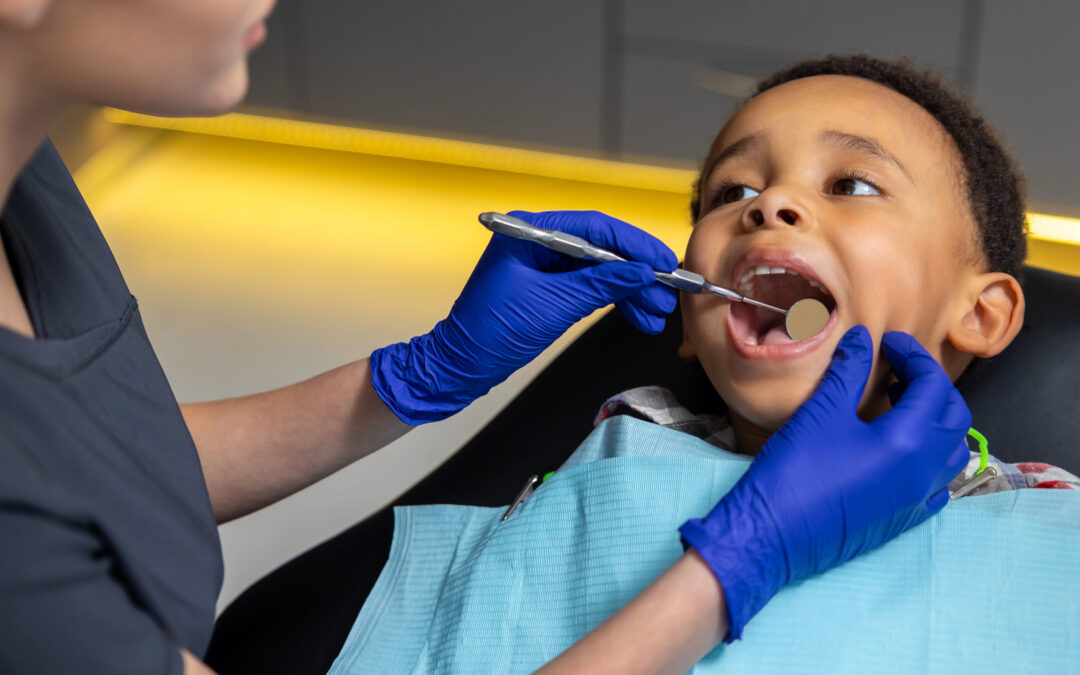

When your dentist says “silver filling,” picture this instead: a paste that’s half mercury by weight — the same neurotoxin that closed down hat factories in the 1800s and triggered international treaties in the 2010s. Yet it’s still being drilled into American teeth, including children’s, every single day. That detail rarely comes up at the appointment, and most patients walk out of the office not knowing what was just placed inside their mouth.
An analysis published in Clinical Chemistry and Laboratory Medicine set out to answer a question that should have been settled decades ago: do these fillings actually raise mercury levels inside the human body?1 Researchers turned to a large, nationally representative dataset of American adults, measured mercury directly in blood and urine, and compared people with amalgam fillings to people without them. What they found has serious implications for how Americans think about routine dental care.
Mercury attacks your body on three fronts: it inflames the nervous system, damages the kidneys that filter it out, and poisons the mitochondria — the tiny power plants inside every cell that produce your energy. That last point explains why fatigue is so often the first symptom: when your cellular engines sputter, everything else slows down with them.
Its symptoms — fatigue, brain fog, headaches, trouble concentrating, irritability, and disrupted sleep — are so easily blamed on aging, stress, or a busy schedule that the underlying cause often goes unrecognized for years. Once mercury enters your body, it doesn’t stay put. It slips past the blood-brain barrier, crosses the placenta during pregnancy, and quietly accumulates in tissues over time.
That’s why the growing movement toward mercury-free dentistry is gaining ground. There is an action alert near the end of this article. A national push to ban mercury fillings is underway right now, and public comments to federal regulators could help decide whether this outdated practice finally disappears from U.S. dentistry.
Mercury Levels Climbed as Fillings Added Up
For the study, investigators analyzed data from 1,377 adults ages 18 to 70, representing more than 180 million weighted Americans, meaning the smaller study group was statistically adjusted to reflect the larger U.S. adult population. Instead of relying on guesswork or self-reported symptoms, the researchers measured actual mercury concentrations in blood and urine samples, then compared people with amalgam fillings to people without them.
The researchers found that nearly 61% of adults fell into the “amalgam exposed” group, meaning they had at least one mercury filling surface. Blood mercury concentrations rose significantly in those adults compared to people without amalgam fillings. Blood total mercury levels were 1.34 times higher, while inorganic mercury — the form most closely linked to dental amalgams — was 1.33 times higher in the exposed group.
Researchers identified a direct relationship between the number of amalgam surfaces and blood inorganic mercury levels. Every additional filling surface added more mercury burden to the bloodstream. Inorganic mercury is not the same as the methylmercury commonly linked to fish exposure. The study showed dental fillings acted as their own unique source of mercury exposure inside the body.
Researchers used a mathematical system that estimates how chemicals move through the body to calculate daily mercury vapor exposure from amalgams. They factored in body weight, urine mercury levels, and urine flow rates to estimate how much mercury vapor adults absorbed each day.
Mercury Moves Through Your Entire Body Once It Leaves the Filling
Mercury vapor enters through the lungs, rapidly absorbs into blood, and then spreads into tissues and organs throughout the body. Your bloodstream essentially becomes a transport system that carries mercury everywhere.
Mercury vapor dissolves into fatty tissues — including the brain, which is roughly 60% fat — and spreads through cell membranes with almost no resistance. That allows it to cross the blood-brain barrier and enter the brain, while also crossing the placental barrier during pregnancy. Once mercury enters tissues, it oxidizes — meaning it changes form chemically — which traps it inside cells and makes removal much harder.
Researchers warned that blood mercury levels don’t fully reflect how much mercury accumulates in organs and tissues. They cited earlier autopsy research showing the number of amalgam fillings correlated with tissue mercury levels even when blood measurements did not. Your bloodwork could look relatively modest while mercury still accumulates inside organs over many years.
Investigators stated that “efforts should be made to reduce/eliminate the continued use of amalgams.” They also recommended that people who want to lower mercury exposure consult dentists trained in safe amalgam removal. This is an important detail because improper drilling releases large bursts of mercury vapor directly into the air you breathe.
Every bite, chew, and clench releases a small puff of mercury vapor — invisible, odorless, and inhaled directly into your lungs. Over a lifetime of three meals a day, that’s roughly 65,000 chewing sessions per decade, each one adding to a cumulative dose your body didn’t ask for. Hot drinks and chronic gum chewing raise exposure further because heat and friction accelerate mercury vaporization.
Your Defenses Against Mercury Exposure
Reading this with a mouthful of amalgam fillings is unsettling. The good news is that mercury exposure isn’t permanent destiny; your body has real defenses, and the choices you make starting today determine whether your burden grows or shrinks.
1. CHOOSE A MERCURY-FREE DENTIST. Before choosing a new dentist, ask: “Does your office place mercury amalgam fillings on patients?” If the answer is yes, keep looking. Mercury doesn’t belong in your teeth any more than lead belongs in your drinking water.
Don’t let the term “silver filling” soften the reality of what’s inside your mouth. Amalgam fillings contain roughly 50% mercury by weight. Choosing a mercury-free dentist immediately lowers your future exposure and protects your family from unnecessary toxic burden.
2. WALK AWAY FROM DECEPTIVE LANGUAGE AND OUTDATED PRACTICES. If a dental office avoids the word “mercury” entirely, pay attention. Clear language matters because informed consent matters. You deserve to know exactly what material goes into your body before a drill ever touches your teeth.
If you’re a parent, this becomes even more important. Children absorb toxic exposures differently than adults because their brains and nervous systems are still developing. Refusing outdated materials protects more than your own health. It changes demand in the marketplace and pressures clinics to modernize.
3. CHALLENGE INSURANCE PLANS THAT DEFAULT TO MERCURY FILLINGS. Many dental plans still reimburse amalgam as the cheapest standard option. That financial pressure keeps mercury dentistry alive. Before treatment begins, ask your insurer exactly which materials are covered and whether mercury-free alternatives qualify for reimbursement.
If your plan penalizes you financially for choosing mercury-free care, create a written objection trail. Send a short letter or email to member services, your employer benefits department, or your state Medicaid office if applicable. Insurance companies track complaints carefully. Enough documented objections force policy reviews and coverage changes over time.
4. LOWER MERCURY VAPOR EXPOSURE IF YOU STILL HAVE AMALGAM FILLINGS. If removal isn’t financially realistic right now, focus on reducing vapor release day by day. Avoid chewing gum constantly, especially on the side with amalgam fillings. Limit very hot drinks directly against those teeth because heat increases mercury vaporization.
Refuse whitening, deep cleaning, or polishing procedures performed directly over amalgam fillings. Both the abrasion and the bleaching chemistry can spike mercury vapor release in the moment, meaning a 30-minute hygienist visit can deliver a mercury dose that takes your body weeks to process.
Most important, avoid casual drilling by dentists who don’t follow strict safe-removal protocols. Improper removal creates a massive short-term mercury exposure spike that can overwhelm your lungs and nervous system. These steps buy you time while you find a qualified biological dentist and get your health in the right place for safe removal.
5. CREATE PRESSURE THAT DENTISTS AND INSURERS CAN’T IGNORE. Call local dental offices and ask one direct question: “Does your office place mercury amalgam fillings?” Share the answers with friends, family members, coworkers, and parents at your child’s school. Leave positive reviews for clinics that practice completely mercury-free dentistry.
Markets shift when patients change their behavior. Dentists notice when people start choosing offices based on mercury-free policies, and insurers notice when enough members reject amalgam coverage. Every conversation, review, and phone call chips away at the system that keeps mercury in people’s mouths. Once enough people reject the default, the default changes.
Choose A Biological Dentist For Further Care
Biological dentists have undergone training that equips them to view and treat your oral health as an integral part of your overall health. They’re also trained how to safely remove mercury fillings. The unsafe removal of your mercury fillings could expose you to toxic amounts of poisonous mercury.
Before scheduling amalgam removal, work with your integrative practitioner to ensure you’re healthy and your body’s detoxification pathways are well supported; this typically means optimizing nutrition, gut health, and mineral status.
The reason for this preparation is practical: during removal, even with proper safety protocols, some additional mercury exposure is possible. A body that is nutritionally depleted or under immune stress will handle that exposure less efficiently. To help you on your search for a biological dentist, refer to the resources below:
- Consumers for Dental Choice
- Dental Amalgam Mercury Solutions (DAMS)— Email them here or call 651-644-4572 for an information packet
- Holistic Dental Association
- Huggins Applied Healing
- International Academy of Biological Dentistry and Medicine (IABDM)
- International Academy of Oral Medicine and Toxicology (IAOMT)
- International Association of Mercury Safe Dentists
- Talk International
Action Alert: Tell the FDA to Ban Mercury Fillings Now
Consumers for Dental Choice, leader of the national and world campaign against mercury in dentistry, filed a petition with the U.S. Food and Drug Administration (FDA) to ban amalgam nationwide. Now is the time to write the FDA and call for action.
Composed 50% of the neurotoxin and reproductive toxin mercury, amalgam does not belong in modern dentistry. Nonetheless, it’s still being used in the U.S., even in children, who are most susceptible to amalgam’s toxic effects. That’s why over the past 15 years, I’ve teamed with my friend Charlie Brown to defeat the dental mercury lobby.
His nonprofit organization Consumers for Dental Choice has had spectacular successes, including an amalgam ban in the entire 27-country European Union. But we must finish the job: Ban amalgam for every American.
Now it’s your turn at bat. You can submit comments to the FDA voicing your support for a ban on mercury fillings. Then tell your story! Was a child you know subjected to this mercury product? Were you misled by the silver fillings deception? Were you harmed by amalgam? Are you a health professional who supports mercury-free dentistry? Here’s how to get your comments in front of FDA: use numbered list style button
- Go to Regulations.gov.
- In the “Comment” section, state your city and state and why you think FDA should ban dental amalgam.
- Answer the two required questions (the others are not required!): “Tell us about yourself” (just a multiple-choice question) and confirm that “I’m not a robot.”
- At the bottom of the page, click the blue “Submit Comment” button.
As consumers and patients, parents and grandparents, dentists and other health professionals, and concerned community members adversely affected by this toxic mercury product, you have an important message. FDA needs to hear from you. Need ideas to get started on your comment? Consider these themes:
I urge FDA to ban amalgam because … use bullet style format button
- Amalgam poses an unreasonable risk because …
- Amalgam was placed in my child’s teeth when he/she was (x) years old, a risk I would not have taken had I known about amalgam’s mercury because …
- Amalgam was placed in my teeth while I was pregnant, breastfeeding, or planning to become pregnant, a risk I would not have taken had I known about amalgam’s mercury because …
- Amalgam was placed in my teeth even though I have a kidney impairment or neurological disorder, a risk I would not have taken had I known about amalgam’s mercury because …
- Amalgam damaged my teeth by …
- I’m a dentist and I’ve practiced mercury-free dentistry for (x) years because …
- I did not know about the mercury in amalgam because of the dental industry’s deceptive practices like …
- Had I known that amalgam contained mercury I would have chosen mercury-free fillings because …
- Everyone has a right to mercury-free dentistry because …
This article was brought to you by Dr. Mercola, a New York Times bestselling author. As a doctor of osteopathic medicine (DO), Dr. Mercola takes a “whole-person” approach to wellness, guiding people to develop attitudes and lifestyles that can help them take control of their health. For more helpful articles, please visit Mercola.com.
Sources and References
1 Clinical Chemistry and Laboratory Medicine October 20, 2025, Volume 64, Issue 2
Find holistic Dentists in the Spirit of Change online Alternative Health Directory.
RELATED ARTICLES:
Holistic Patients Need To Know How Oral Wellness Affects Whole Body Health
Safeguard Your Smile: Essential Holistic Practices For Healthy Teeth
Recent Comments