

Energy traditions across many cultures describe a person as more than flesh and bone. Alongside the physical body there is a field of energy, and within that field, sit centers of activity called chakras, a Sanskrit word meaning “wheel.” There are seven of these main centers, running from the base of the spine to the crown of the head. Each is linked with a specific theme: safety and belonging at the root, creativity and feeling at the sacral, personal power at the solar plexus, love at the heart, self-expression at the throat, intuition at the third eye, and a sense of connection to something larger at the crown.
The chakras are the map. Sound and crystals are the two most common ways of walking it.
Sound Moves Through Everything
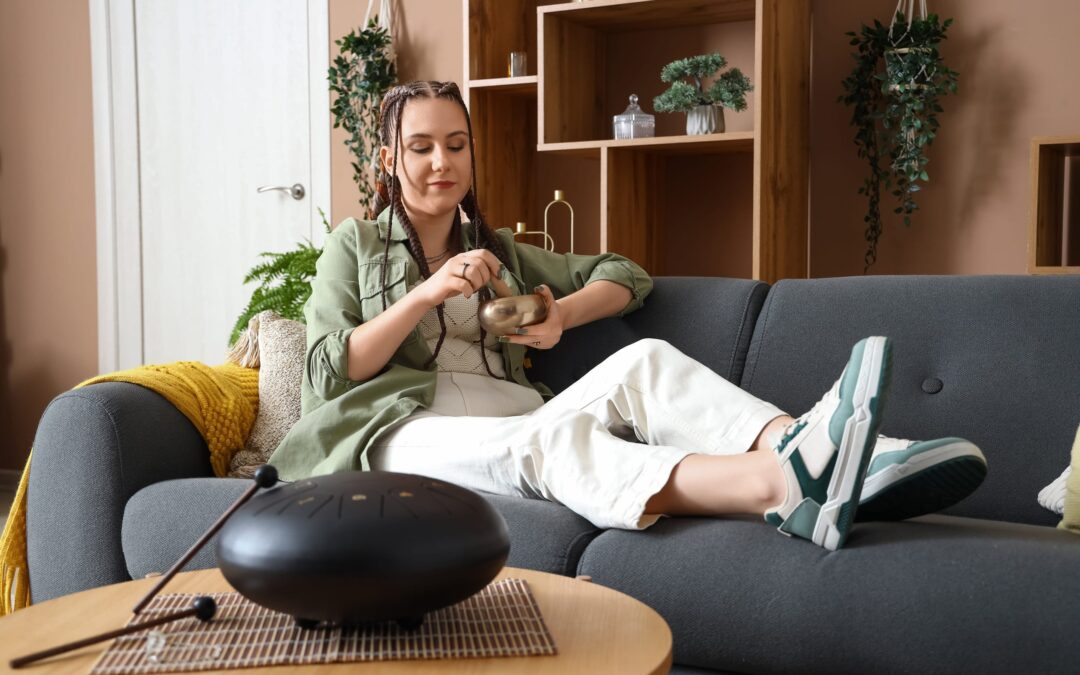
Sound is a vibration you can feel before you can name it. Anyone who has stood near a large bell, or sat in a room while a singing bowl is played knows the sensation that gathers in the chest and belly. Healing practitioners can begin to work with crystal and Tibetan bowls, tuning forks, drums, chimes and the human voice with self-study or by taking an energy healing course, learning to listen to these instruments with care. Many people find the effect deeply calming. The mind quiets and the breath grows longer without any effort at all.
Traditionally, each chakra is paired with a tone. Lower notes are associated with the root and sacral centers, middle tones with the heart, and higher tones with the throat, third eye and crown. A tuning fork held near the heart, or a bowl sounded at the feet, gives the body something steady to rest against. Sound also does something a stone cannot. It fills the whole room and reaches the whole person at once, with no need to place it anywhere in particular.
Crystals Hold The Space
If sound is movement, crystals are stillness. A stone does not change from one day to the next. It is the same weight in your palm this week as it was last week. Many practitioners find that steadiness useful as a point of focus, both for the client and for themselves. Placed on or near a chakra, a stone gives attention somewhere to land.
Common pairings include carnelian at the sacral center, citrine at the solar plexus, rose quartz or green aventurine at the heart, lapis at the throat, amethyst at the third eye and clear quartz at the crown. These color correspondences are traditional guides, not rules. Many gifted practitioners choose stones entirely by touch and intuition, and their work is lovely to receive. If a stone feels right in your hand, that is worth taking seriously.
How The Three Work Together In Practice
A session often begins with a few minutes of quiet breathing while the person settles. The practitioner may place stones along the body, one for each center or only for the ones that seem to need attention. Then the sound begins, usually low and slow. A bowl is played near the feet and gradually moved upward. The crystals stay in place as anchors while the sound travels through the field around them.
The chakra system gives the practitioner a way to read the session. Where does this person feel stuck? Where do they feel open? Which center asks for more time? The sound supplies movement, the stones supply focus, and the chakra map supplies direction. Take away any one of them and the work still happens, but with all three the harmony is fuller.
Afterward, people describe feeling heavy, light, sleepy, tearful, or just quiet. All of these experiences are common and none of them need fixing. A glass of water and some rest are usually all that is called for.
What Experience Teaches
With many years of practice comes learning the biggest lesson of restraint. Newer practitioners often want to use everything at once, ten stones, three bowls and a full chakra sequence. Usually less is more. Pay attention to the person in front of you. If they are tense, slow down. If they are new to this kind of work, keep it simple.
You do not need a studio to begin. Sit comfortably and hold a stone you like in one hand, with the other hand resting on your heart. Breathe slowly for a few minutes. Then hum a low note, the kind you can feel in your chest, and let it last as long as one exhale allows. Repeat it three times and notice what changes, if anything. Do the same again tomorrow.
Small, regular practice teaches more than one dramatic session ever will. Over time you begin to recognize how your own energy feels on an ordinary day, which makes it much easier to notice when something has shifted. Take this work deeper at your own pace. Sound, stone and the chakra map have been used in one form or another for centuries or even millennia. They are still around because people keep finding them useful.
Doug Chen is a healing sound practitioner based in Seattle, whose lifelong love of music led him to explore its healing capacities, after a serious skiing accident left him unable to continue his high school sports coaching career. He especially enjoys sharing his skills and knowledge with sports enthusiasts.
Find holistic Sound Healing in the Spirit of Change online Alternative Health Directory.
RELATED ARTICLES:
Sounds of Power
What Are Crystals?
Recent Comments