
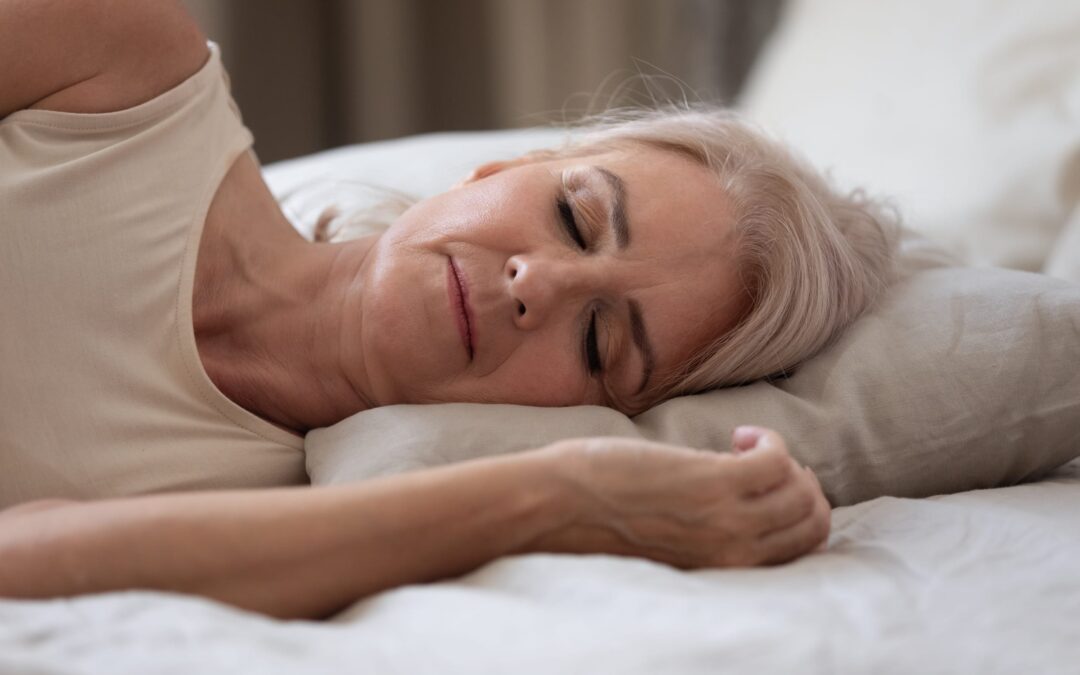

Many Americans today are willing to spend money on a good night’s sleep. Case in point: In 2023, the U.S. home-bedding market reached $25.7 billion,1 a sign of just how important bedtime comfort has become, and pillows play a big role in it. They’re easy to replace, and with specialty and luxury options costing $30 to $300,2 it’s no surprise that people try different types to see what helps them rest better.
But even seemingly harmless habits can have unintended consequences. When something as simple as a pillow starts affecting the body in ways most people never consider, it’s worth paying attention — especially for older adults who are keeping an “eye” on their health.
A Closer Look At Glaucoma
Glaucoma, often called a “silent thief,” is the second leading cause of blindness worldwide, affecting about 80 million people and rising3 with aging populations. Most people do not notice early changes because glaucoma usually develops without pain or overtly visible symptoms.
The disease progresses when fluid pressure rises inside the eye — a condition called ocular hypertension — and gradually crushes the delicate fibers of the optic nerve. Peripheral vision declines first, followed by central vision as glaucoma advances.
The risk rises for individuals over age 40, especially those with Black or Hispanic heritage, and with a family history of glaucoma or ocular hypertension, diabetes, high blood pressure, myopia, prolonged steroid use, previous eye injuries or surgeries, and conditions such as pigment dispersion syndrome.
Aside from relieving pressure in the eye, treatment options include prescription eyedrops or oral medications, laser procedures, surgical drainage techniques, and supportive nutritional approaches. Regular eye exams are also important, because optic nerve damage cannot be reversed.
Can Sleeping with Fewer Pillows Be Good for Your Eyes?
A 2024 observational study published in the British Journal of Ophthalmology4 examined how sleeping position affects intraocular pressure (IOP) and ocular blood flow in people with glaucoma.
Researchers followed 144 adults with various types of glaucoma and measured their intraocular pressure (IOP) every two hours over a 24-hour period while sitting, lying flat, and lying down with two pillows (also labeled as the high-pillow position) elevating the head by an angle between 20 and 35 degrees. The study evaluated changes in IOP, ocular perfusion pressure (OPP), which refers to the net blood pressure driving oxygen into the eye, and jugular vein blood flow to assess how pillow use influences nighttime eye health.5,6
When participants slept with two pillows, average IOP rose from 16.62 millimeters of mercury (mmHg) to 17.42 mmHg, an increase of approximately 1.6 mmHg; 67% of patients experienced a measurable increase in pressure, and IOP fluctuations were greater during pillow use.
OPP dropped from 58.71 to 54.57 mmHg when participants used the high-pillow position. That means less fuel reaching the optic nerve precisely when nighttime repair should be happening. Lower OPP indicates reduced delivery of oxygen and nutrients to eye tissues, which increases vulnerability to tissue damage from poor blood supply.
Stacked Pillows Narrow The Jugular Vein
Imaging studies in 20 healthy volunteers showed that stacked pillows narrowed the jugular vein and altered blood flow dynamics. This suggests that neck bending compresses venous outflow pathways, thereby limiting drainage of aqueous humor — the clear fluid that nourishes the eye and maintains pressure balance — and venous blood from the eye, contributing to IOP elevation.
Subgroup analysis revealed that younger participants and individuals with primary open-angle glaucoma experienced greater increases in IOP with pillow use. This indicates that certain patient populations may be more sensitive to postural changes during sleep.
For glaucoma patients, avoiding sleeping positions that flex the neck or compress the jugular veins may help reduce nighttime IOP spikes. While further research is needed, these findings suggest that modifying a simple nightly habit could support long-term eye health and serve as an easy, non-drug strategy for protecting the optic nerve.
The Bates Method for Better Eyesight Without Glasses
Another non-drug approach for better visual health is The Bates Method7, one of the most enduring approaches to natural vision improvement. First introduced in 1919 by Dr. William H. Bates, an American ophthalmologist, the method was based on his belief that eye strain and not structural defects caused most vision problems.
Today, this method continues to attract interest from those exploring alternatives to glasses, especially among advocates of relaxation-based wellness. Many natural health teachers and vision coaches continue to adapt Bates’ ideas today. In fact, author Aldous Huxley famously credited the method with helping his vision.
Rather than treating blurry vision as a problem of weak muscles, the Bates Method encourages mental and physical relaxation to reduce chronic eye tension. Core practices aim to soften focus habits, restore natural eye movement, and build visual awareness without relying on corrective lenses.
One of the most well-known Bates practices, palming involves gently covering the closed eyes with the palms to block out light and encourage relaxation. Practitioners typically hold this position for a few minutes, allowing eye muscles and the nervous system to settle before returning to visual tasks.
The Bates Method emphasizes “eye exercises,” particularly eye movement and shifting focus, which superficially resemble techniques used in vision therapy. However, vision therapy is a clinically supervised, medically supervised approach used to treat conditions such as amblyopia (lazy eye) or convergence insufficiency.
Bates’ ideas carry on through organizations such as Bates Method International,8 which teaches relaxation-based techniques derived from his original work and from his book The Bates Method for Better Eyesight Without Glasses.
While controlled studies have not confirmed that the Bates Method can reverse myopia or astigmatism, many people report subjective improvements in visual comfort, reduced strain, and greater awareness of visual habits.
This article was brought to you by Dr. Mercola, a New York Times bestselling author. For more helpful articles, please visit Mercola.com.
Sources and References
1Grand View Research, U.S. Home Bedding Market (2024 – 2030)
2 Storables, October 20, 2024
3 The Epoch Times, April 20, 2023 (Archived)
4, 5 Br J Ophthalmol. 2026 Jan 27:bjo-2025-328037
6 BMJ Group, January 28, 2026
7 Vivid Vision, April 17, 2023
8 Bates Method International, Introduction
Find holistic Vision Improvement Resources in the Spirit of Change online Alternative Health Directory.
RELATED ARTICLES:
Are Your Eyeglasses Worsening Your Vision?
Palming for Better Vision
Recent Comments