
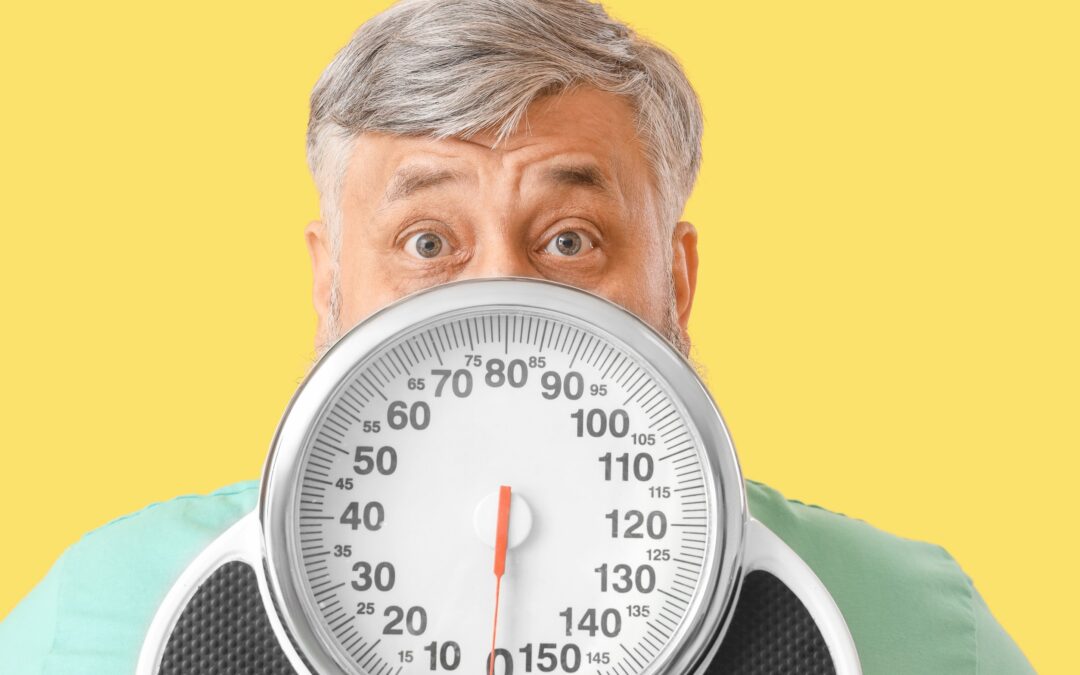

Nearly seven out of 10 U.S. adults now meet the criteria for obesity under a new, more comprehensive definition tested in JAMA Network Open.1 The new standard — previously proposed by an international panel of experts in The Lancet Diabetes & Endocrinology2 — goes beyond body mass index (BMI) to include waist and hip measurements that reveal hidden fat conventional BMI misses.
By doing so, it captures millions of Americans whose weight appears “normal” but whose fat distribution signals a higher risk for metabolic disease. Obesity means more than simply carrying extra weight; it reflects a buildup of body fat that disrupts how your cells use energy. Even with a normal BMI, fat that gathers deep in your abdomen and around your organs releases inflammatory chemicals that impair insulin function, raise blood pressure, and strain your heart and liver.
These effects often unfold silently for years, showing up as fatigue after meals, creeping blood sugar, or blood pressure that refuses to normalize. For decades, BMI alone dictated whether someone was labeled obese. But that narrow measure overlooks where fat is stored — and that’s where the real danger lies. By incorporating waist and hip data, the JAMA Network Open study uncovered a hidden epidemic of “normal-weight obesity,” especially among older adults.
This shift is a wake-up call. Your waistline offers a clearer window into your metabolic health than the scale ever could. Understanding this new definition helps you see why a healthy weight doesn’t always mean a healthy body, and why measuring fat where it matters most could change how you protect your long-term health.
New Definition Reveals Hidden Obesity In Millions Of Americans
Obesity has long been defined almost entirely by BMI — a simple calculation using weight and height. But BMI alone doesn’t show where fat is stored or how it affects your health. To fix this, an international commission of experts from multiple medical specialties proposed a new definition published in The Lancet Diabetes & Endocrinology.3
The JAMA Network Open study uncovered a hidden epidemic of “normal-weight obesity,” especially among older adults.
Endorsed by at least 76 professional organizations worldwide, this new guideline classifies obesity using not just BMI but also additional measures, such as waist and hip measurements, or direct scans of body fat. It also distinguishes between clinical obesity, where fat is already harming organs, and preclinical obesity, where fat buildup has begun but damage isn’t yet visible. This change marks a major shift in how doctors and researchers identify who’s truly at risk.
This large-scale analysis applied the Lancet-based criteria to real-world data from 301,026 U.S. adults in the National Institutes of Health’s All of Us cohort. The goal was to see how this expanded definition would change obesity classification and reveal previously hidden health risks across diverse populations.
Significant Increase In Obesity Under New Definition
Using only BMI, 42.9% of adults were categorized as obese. But when the new Lancet-based definition was applied, 68.6% met the criteria — a 60% surge in national obesity prevalence.
This increase was driven by those with “anthropometric-only obesity,” meaning individuals whose BMI fell within the normal or overweight range but whose waist circumference, waist-to-hip ratio, or waist-to-height ratio indicated excess central or visceral fat.
About 1 in 4 adults were reclassified as obese under the new definition, mostly from the overweight category, while roughly 1 in 17 had a normal BMI yet carried hidden visceral fat that increased their risk for metabolic disease.
These individuals faced significantly higher risks of diabetes, cardiovascular disease, and organ dysfunction. This means someone could look lean on the outside while silently developing metabolic damage inside — a reality BMI fails to capture.
Older Adults And Men Experienced The Largest Jump In Obesity Classification
Using the new framework, 78% of Americans aged 70 and older met the criteria for obesity — double previous estimates. Men were more likely to fall into the measurement-only category, likely due to age-related hormone shifts, muscle loss, and central fat accumulation. These findings highlight that weight stability with age does not guarantee metabolic health.
The study reinforced that visceral fat — the type that wraps around organs — is far more harmful than subcutaneous fat under the skin. Visceral fat is metabolically active, releasing inflammatory cytokines and fatty acids. This damages mitochondria, lowering their ability to generate cellular energy.
The resulting oxidative stress disrupts insulin balance and sets the stage for diabetes, fatty liver, and heart disease — a chain reaction that unfolds quietly over time. Two people with identical BMIs can have completely different risk profiles depending on where their fat is stored.
By identifying those with unhealthy fat distribution before organ damage occurs, the new classification creates an opportunity for early intervention. You don’t need to wait for abnormal lab results — your waist-to-hip ratio alone helps reveal whether your cells are under metabolic stress.
5 Steps To Restore Your Metabolism And Reverse Hidden Obesity
If you’ve been frustrated by stubborn weight gain or chronic diseases — even though your BMI looks “normal” — your body isn’t broken. It’s just stuck in energy-storage mode. The real problem isn’t a lack of willpower or motivation; it’s cellular energy failure.
When your mitochondria — the power plants inside your cells — are poisoned by modern foods and environmental toxins, your metabolism slows, fat accumulates, and energy disappears. You can fix it by giving your cells what they need to burn fuel efficiently again.
CUT VEGETABLE OILS AND ULTRAPROCESSED FOODS. The first and most powerful thing you can do to restore your metabolism is to stop feeding it the wrong fuel. Vegetable oils — like canola, soybean, corn, sunflower, safflower, and grapeseed — are loaded with linoleic acid(LA), a polyunsaturated fat that clogs your mitochondria and traps you in fat storage mode when consumed in excess.
Reading labels becomes your defense — if it has seed oils, additives, or mystery ingredients, it’s not serving your health.
These oils hide in almost every restaurant meal, salad dressing, and “healthy” processed snack. Replace them with real, stable fats such as grass fed butter, ghee, or tallow. Avoid chicken and pork, which are also high in LA, and choose grass fed beef or lamb instead.
Along with eliminating vegetable oils, remove ultraprocessed foods from your daily routine. These engineered products are designed to hijack your brain’s reward centers and make you eat more. Cooking at home gives you full control of your ingredients and resets your body’s natural hunger signals. Reading labels becomes your defense — if it has seed oils, additives, or mystery ingredients, it’s not serving your health.
EAT ENOUGH HEALTHY CARBS TO HEAL YOUR GUT AND FUEL YOUR CELLS. Your metabolism runs on glucose, and glucose comes from carbohydrates. The problem isn’t carbs themselves — it’s the wrong kind in the wrong gut environment. When your gut lining is inflamed, it leaks bacterial toxins into your bloodstream, slowing mitochondrial function. If you feel bloated or drained after meals, that’s a sign your microbiome is struggling.
Start with easy-to-digest carbs like fruit and white rice to calm inflammation. Once your digestion improves, slowly bring back root vegetables, then legumes, and later, whole grains. Aim for around 250 grams of healthy carbs daily. This level supports thyroid function, balances stress hormones, and helps your cells recover from years of under-fueling.
Think of it as repairing the engine instead of starving it. When your gut heals, beneficial bacteria produce butyrate, a short-chain fatty acid that strengthens your intestinal lining, improves mood, and keeps cravings under control.
LOWER YOUR EXPOSURE TO ESTROGEN AND ENDOCRINE DISRUPTORS. Hidden estrogen overloadkeeps your metabolism sluggish and promotes fat gain, especially around the waist. It affects both men and women by throwing off thyroid and progesterone balance. Ditch plastics altogether — no more heating food in plastic containers or drinking from disposable bottles.
Store food in glass or stainless steel instead. Skip chemical-based personal care items and avoid touching thermal paper receipts whenever possible. Using natural progesterone helps counter excess estrogen, stabilizing your mood, energy, and metabolism.
REDUCE ELECTROMAGNETIC FIELD (EMF) EXPOSURE TO PROTECT YOUR CELLULAR ENERGY. Phones, Wi-Fi, and Bluetooth devices constantly emit EMFs that stress your cells. EMFs force calcium into your mitochondria, slowing their energy output. To protect your energy system, turn off Wi-Fi at night, keep your phone on airplane mode while you sleep, and use wired connections whenever possible. Ditch wireless ear buds — they beam EMFs directly into your head. These small habits lower oxidative stress, helping your cells repair and recharge during sleep.
MOVE DAILY TO AMPLIFY YOUR BODY’S ABILITY TO BURN ENERGY. Movement multiplies the benefits of these changes. Even simple daily motion — walking, stretching, and resistance training — improves insulin sensitivity and teaches your cells to burn glucose again. If you spend most of your day sitting, try setting a timer to stand up or walk for two minutes every half hour. Think of every step as a signal to your mitochondria: “Make energy, not fat.” Over time, this combination of clean fuel and consistent motion retrains your body to burn energy efficiently. Ideally, work your way up to one hour of walking daily.
This article was brought to you by Dr. Mercola, a New York Times bestselling author. For more helpful articles, please visit Mercola.com.
Sources and References
1, JAMA Network Open October 15, 2025; 8;(10):e2537619
2, 3 The Lancet Diabetes & Endocrinology January 14, 2025
Find holistic Weight Management Resources in the Spirit of Change online Alternative Health Directory.
RELATED ARICLES:
The Obesity Epidemic Is Fueled By Biology, Not Lack Of Willpower
Obesity, Second To Smoking As The Most Preventable Cause Of US Deaths, Needs New Approaches
Recent Comments